|
Fort Bridger State Historic Site --Western Pioneer History in Wyoming
Story and Photographs
by Tom Straka
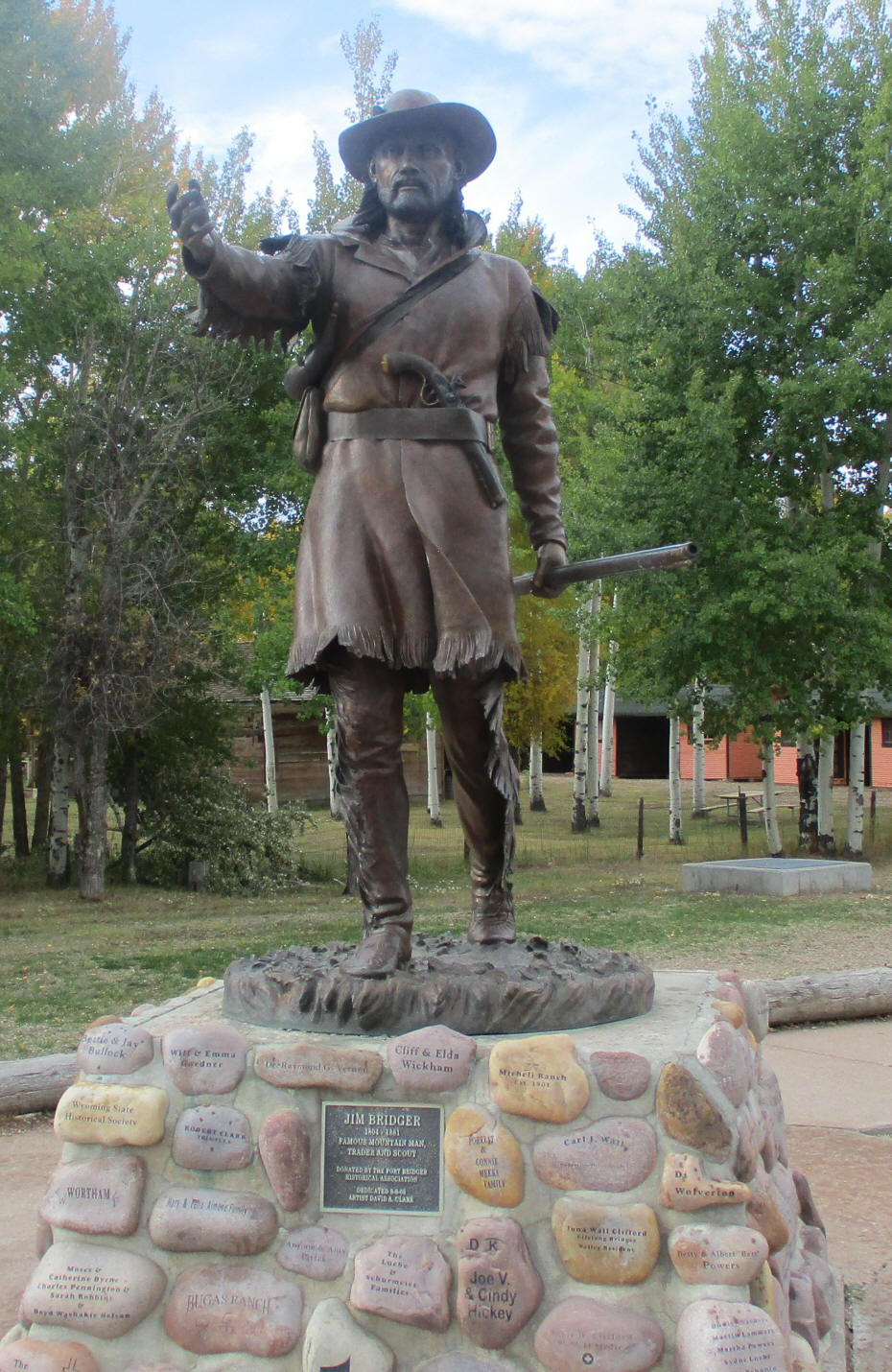
Jim Bridger, 1804 -- 1881, Mountain Man,
Trader, Scout.
Fort Bridger is a well-known location in
early Western history as it lies on a main path of Western
exploration and emigration. Fort Bridger was in a strategic
location, a crossroads, and its history incudes major
western trails that passed by it: the Oregon Trail, the
California Trail, the Mormon Pioneer Trail, the Pony Express
Trail, the Overland Trail, the Cherokee Trail, the Lincoln
Highway, Interstate 80, and the Union Pacific Railroad. Today it
is a
state historic site, easily accessed off of Interstate 80,
sitting in the center of the small notch cut out of northeastern
Utah by southwestern Wyoming.
Fort Bridger was
established in 1843 by the celebrated frontiersman Jim
Bridger and his partner Louis Vasquez on the Blacks Fork of the
Green River to take advantage of Indian trade and the nearby
Oregon and California Trails, mainly as a fur trading post and
resupply point. It had been a favorite rendezvous site for early
explorers and Native Americans. The trading post was
described as a post consisting of "two adjoining log houses,
dirt roofs, and a small picket yard of logs set in the ground,
and about eight-feet high." It did have a blacksmith's shop,
which was critical to the emigrant trade.
In 1847 Brigham Young and Jim Bridger had a
fateful encounter as the Mormons trekked towards their new home,
which would become Salt Lake City, a little over 100 miles to
the southwest. Bridger advised against settling in the Great
Basin, saying he'd "give $1,000 for a bushel of corn raised in
the basin." Young replied, "Wait a little, and we will see."
Between 1850 and 1861 Fort Bridger was part of Utah Territory,
with Young as territorial governor until the end of the
Utah War in 1858 when Utah submitted to federal rule.
Bridger would be in
constant conflict with the Mormons, eventually selling his
trading post to them. The Mormons took
possession
of Fort Bridger in 1855, but ended up destroying it in 1857 in
order to hinder the advance of federal troops into Utah.
The U.S. Army rebuilt Fort Bridger during
the Utah War, and it would remain a
military fort until 1890. It protected laborers on the
transcontinental railroad and miners, served as a base during
the Indian Wars, and protected Shoshone Indians near the fort
until a reservation was established for them near Wind River.
The trading post was turned over to William Alexander Carter,
who would become Wyoming's first millionaire. Fort Bridger also
served as a Pony Express and telegraph station, adding to its
significance. While the
Pony Express only existed for 18 months, it gained
fame in Western history for covering 1,800 miles in just ten
days. Emigrants might find a letter at the fort or had the
opportunity of sending one back home.
Today Fort Bridger is a Wyoming State
Historic Site. It includes a 37-acre site, 27 historic
structures, and four historic replica structures. The site
offers an easy-to-follow self-guided tour of the fort, living
history demonstrations, open archeological excavations, museum
exhibits, and a civilian cemetery.
Some Stops on the Self-Guided Tour
Entering the fort, the trading post is
first encountered and is "virtually all that remains of the once
thriving commercial empire of Judge William Alexander Carter and
his wife Mary, Fort Bridger's only two Post Traders." Carter
arrived in 1857 with the U.S. Army and received the appointment
as Post Trader. With soldiers, emigrants, railroad workers,
cattlemen, settlers, and Native Americans as customers, he
amassed a fortune.
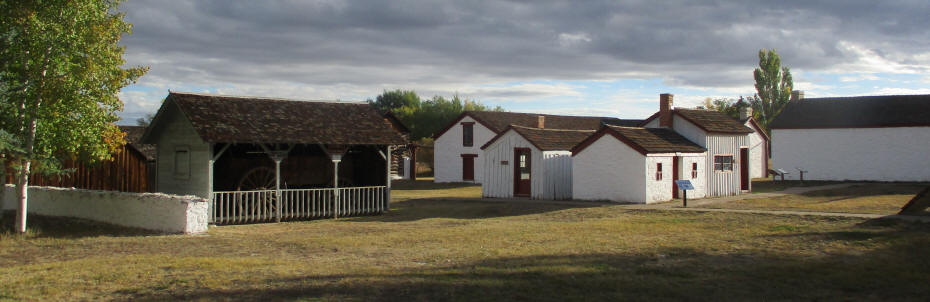
Carter's
trading post area is a large section of the fort, with a large
concentration of buildings. The functions of the buildings serve
to enlighten on what was important in terms of trade.
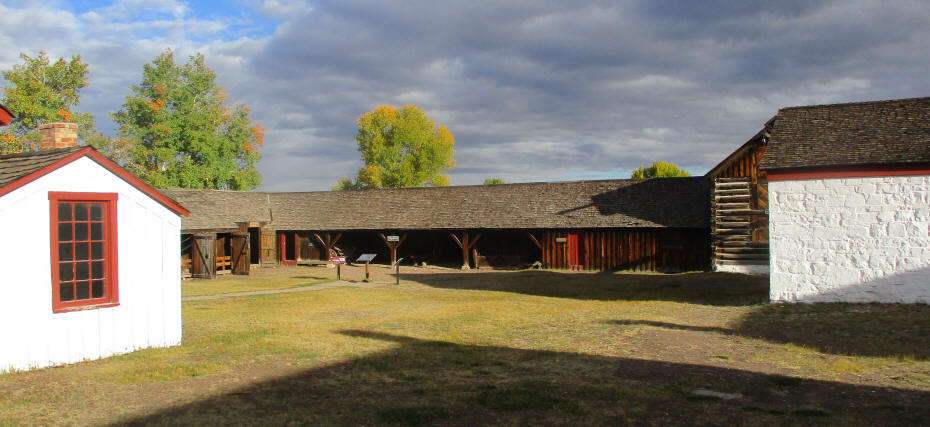
A large portion of the trading post was
used for shops and storage. Many of the buildings are filled
with historical artifacts.
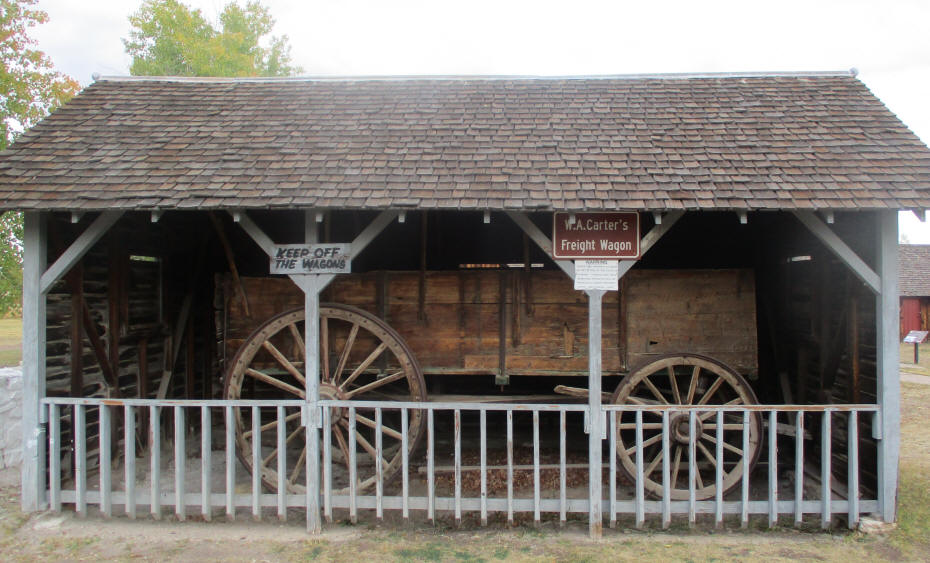
Carter's
freight wagon.
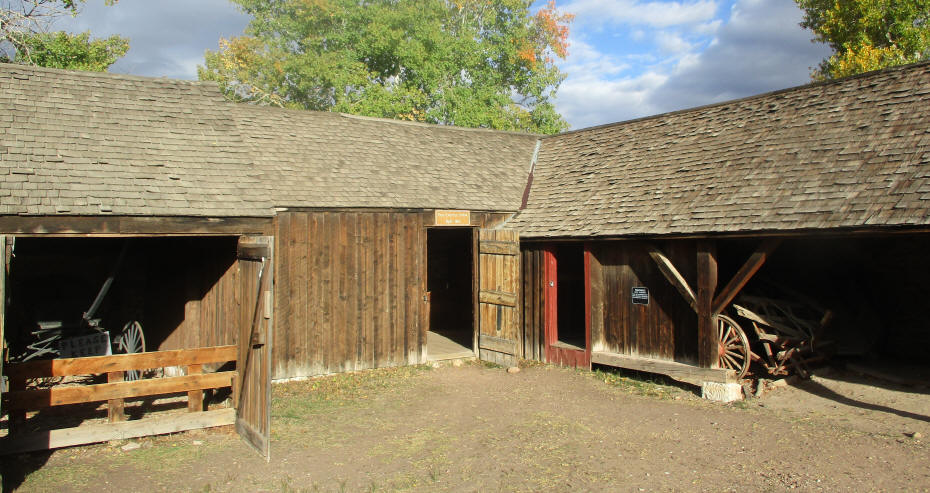 . .
The stables were just for pampering
horses and storing carriages. Alongside his private stables,
Carter designated the man section of the stables to serve as a
key hub of the Pony Express.

The log-chinked ice house. The three
doors allowed this tall building (nearly 19 feet) to be entered
at all levels as the ice stock melted. The lower level contained
beef.

The Carriage
House, with carriage.
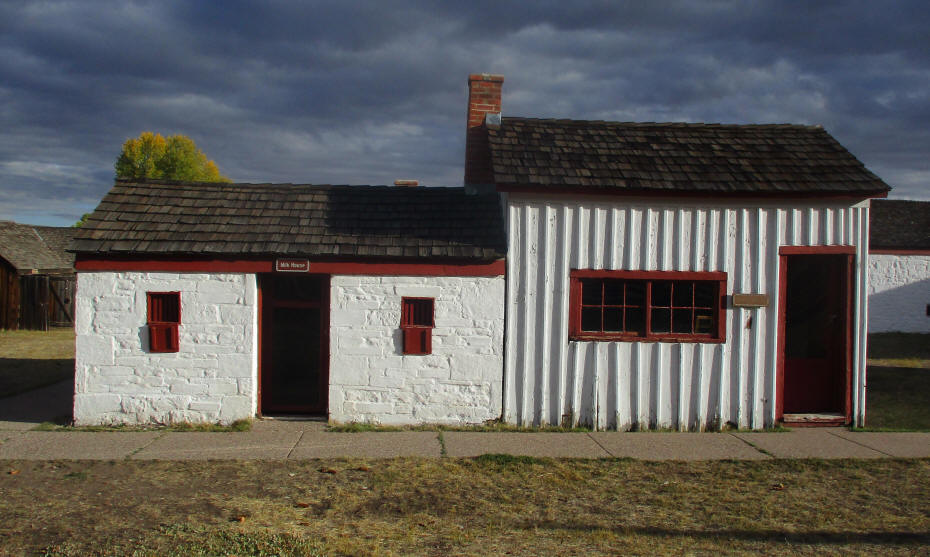
The Milk House served to process and
store luxury dairy products. Picture creamy butter, rich cheese,
and cold milk--really luxuries in 1860s Wyoming. This was not
your average frontier fare. It served to display William
Carter's wealth.
Jim Bridger's Earlier Trading Post
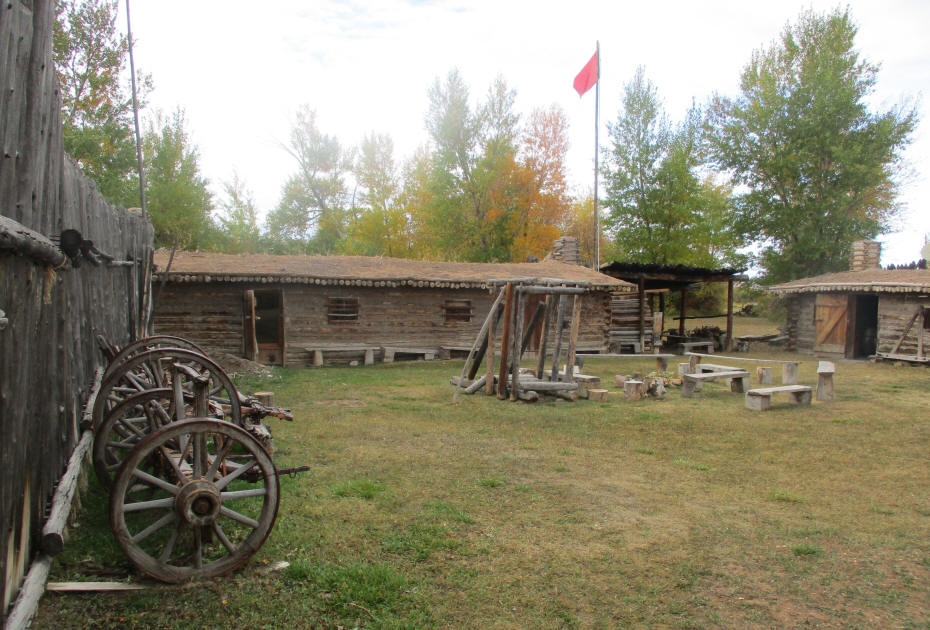
At the back of the site is a reconstruction
of Jim Bridger's original trading post. It resembles a fort and
lacks anything resembling the luxuries of the Carter trading
post. This trading post was a collection of crude log cabins,
broken into stockades, one for the living, blacksmithing, and
trading quarters and one for the livestock. Bridger wrote back
East for financing supplies for his trading post, describing it
as: "I have established a small fort, with a blacksmith shop and
a supply of iron in the road of the emigrants on the Black Fork
of Green River, which promises fairly. In coming out here they
are generally well supplied with money, but by the time they get
here they are in need of all kinds of supplies, horses,
provisions, smith work, etc. They bring ready cash from the
states, and should I receive the goods ordered, will have
considerable business in that way with them, and establish trade
with the Indians in the neighborhood."
Written records describe large numbers of
"Indian lodges, or teepees and wickiups that were stationed at
the trading post for the whole summer to take advantage of the
newly booming economy." The trading post was open for business
during the warmer part of the year when emigrants were on the
move, but closed down for the winter.

A replica of Jim Bridger's original
trading post, resembling a fort.
Another view of Jim Bridger's trading
post.
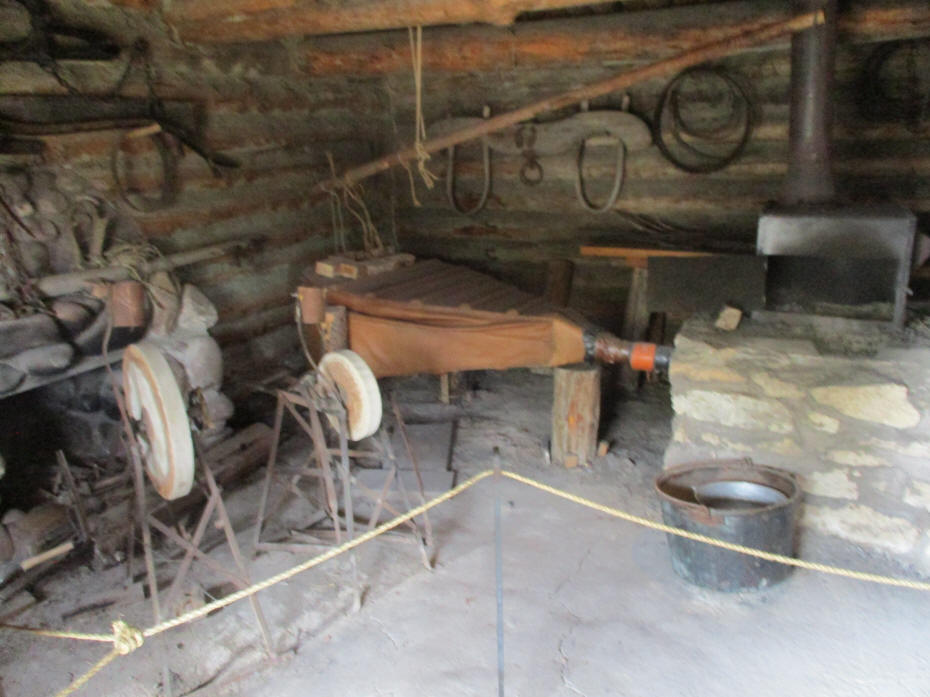
The Blacksmith Shop at Jim Bridger's
trading post.
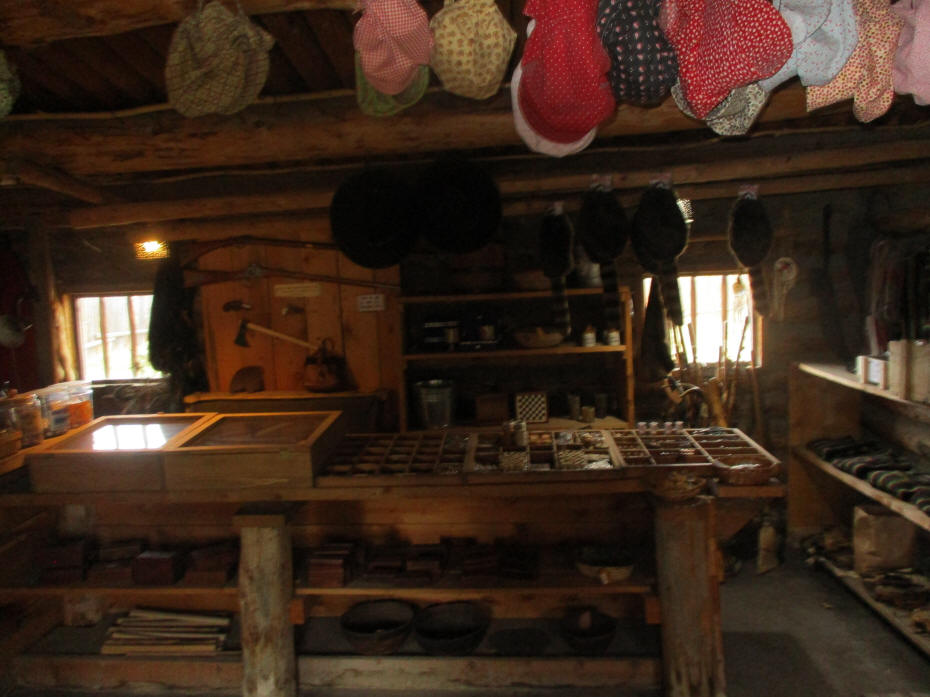
The wide range of trading goods at Jim
Bridger's trading post.
Military Buildings
Officers quarters survive, but no barracks
and several stone military buildings are on site. Most of the
buildings have furnishings. After abandonment of Fort Bridger in
1890, the wooden buildings were sold and moved a short distance
away. Some have been returned.

The
Commanding Officer's House, completed in 1884 to replace the old
log Commanding Officer's House in use since 1858. After the fort
was abandoned in 1890, it was moved a short distance away and
served as a hotel. This wasn't your average soldier's bunk, it
housed the top brass and their family, plus sophisticated
housing for VIPs (military and civilian), including grand
dinners for important guests.
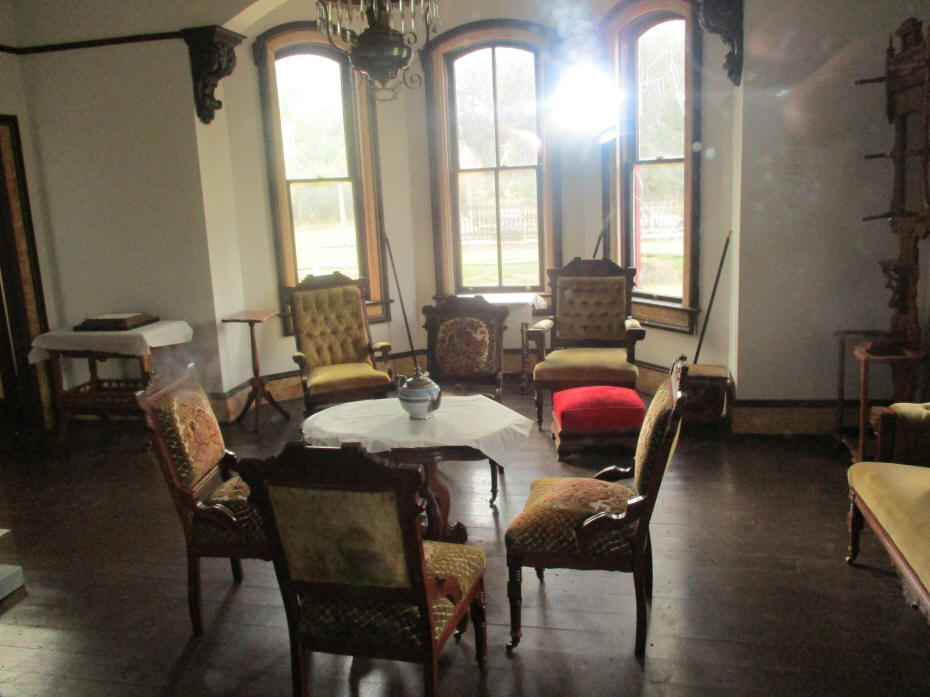
Many of the rooms inside the Commanding
Officer's House are furnished to the period.
One of the more interesting aspects of
the Commanding Officer's House is the Commanding Officer's
Outhouse behind the main building. Windows in an outhouse seemed
unusual to me.
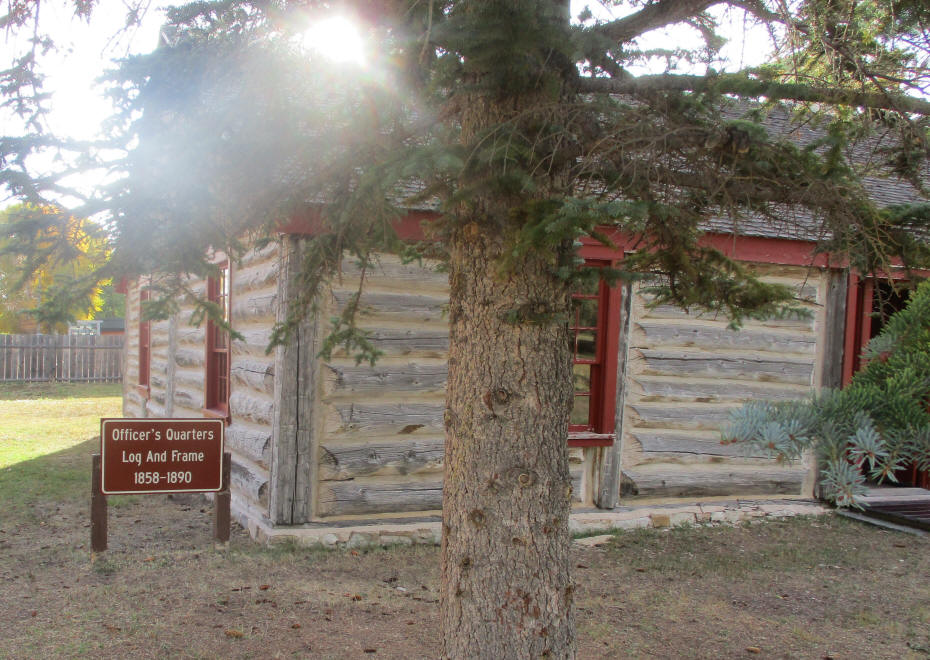
It paid to be an officer. Six identical
log buildings served as officers quarters, making up officers
row. These buildings were set up as a duplex with a shared
kitchen and dining area. The hall split the living area in half
with two rooms for each officer. As an officer, the opportunity
to improve your living conditions by having personals space was
a huge benefit.
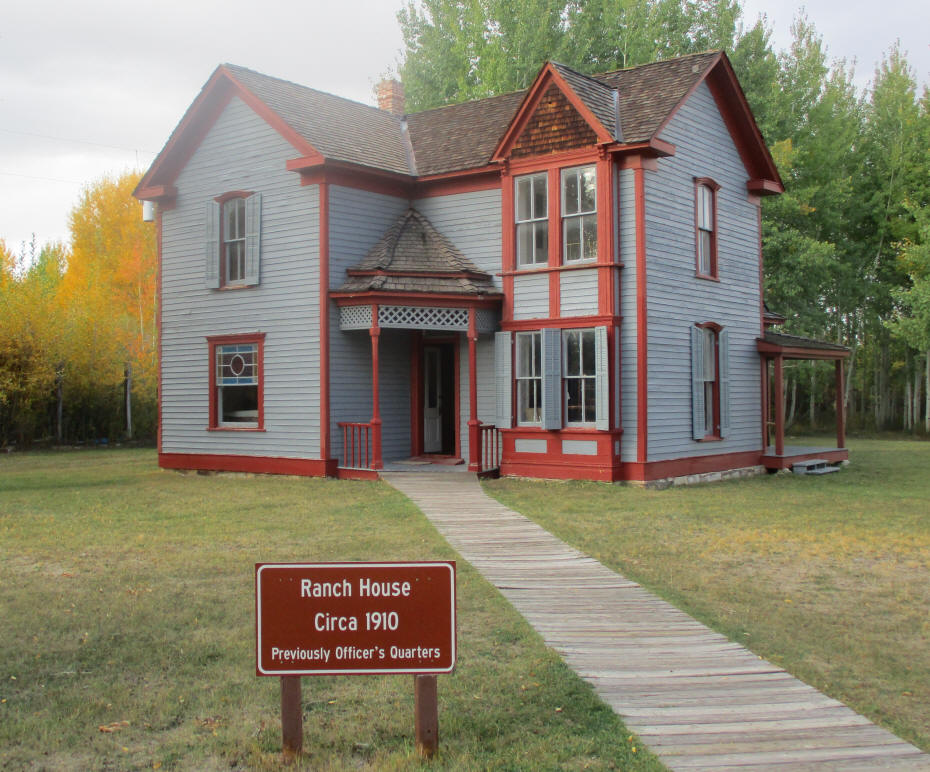
A ranch house which previously served
as officers quarters, one of several frame houses moved back to
the fort.

Most of the houses are furnished,
including the ranch house.
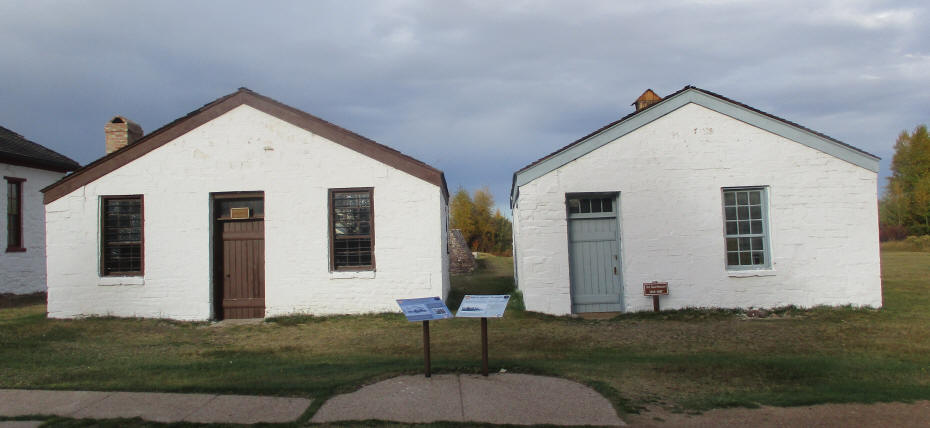
Many of the original stone buildings
are still at the fort, including the commissary and old guard
house. This stone guard house replaced a log guard house. The
new guard house is located nearby.
The Museum and Motor Court
Fort Bridger Historic Site has a central
focus on its museum, which covers the historic periods
illustrated by the site, including the Mountain Man Era
(1843-1853), the Mormon Era (1853-1857), the Military Era (1858-
1890), the Early 20th Century, and the Museum Era.
The museum is first rate and extensive. It explains the history
well and provides plenty of context.
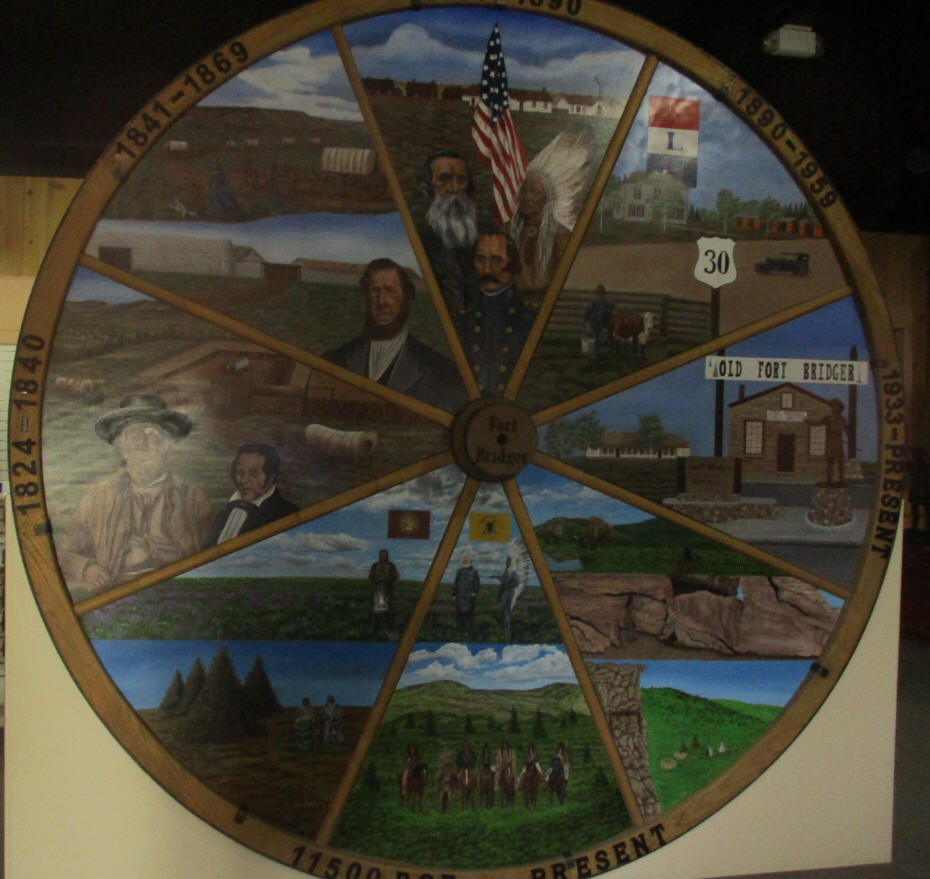
The wheel of the historical hub of
trade and travel at Fort Bridger denotes the various periods
that define Fort Bridger's history. Those same periods are
themes of the museum and each theme is represented in sections
of the museum.
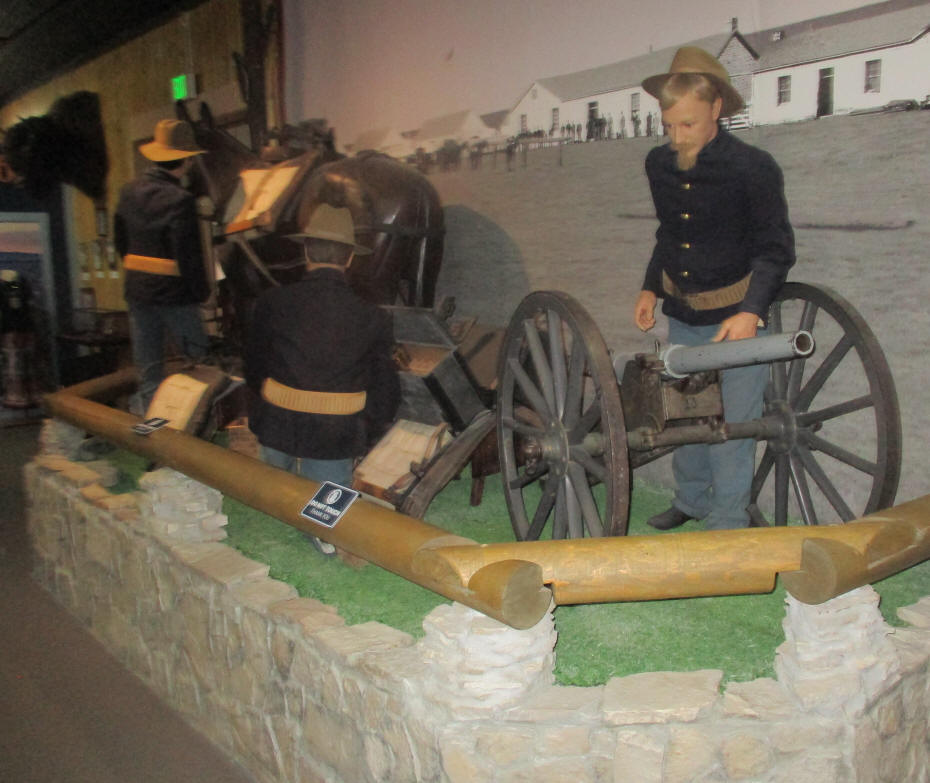
A military display, as you'd expect
there are many more.
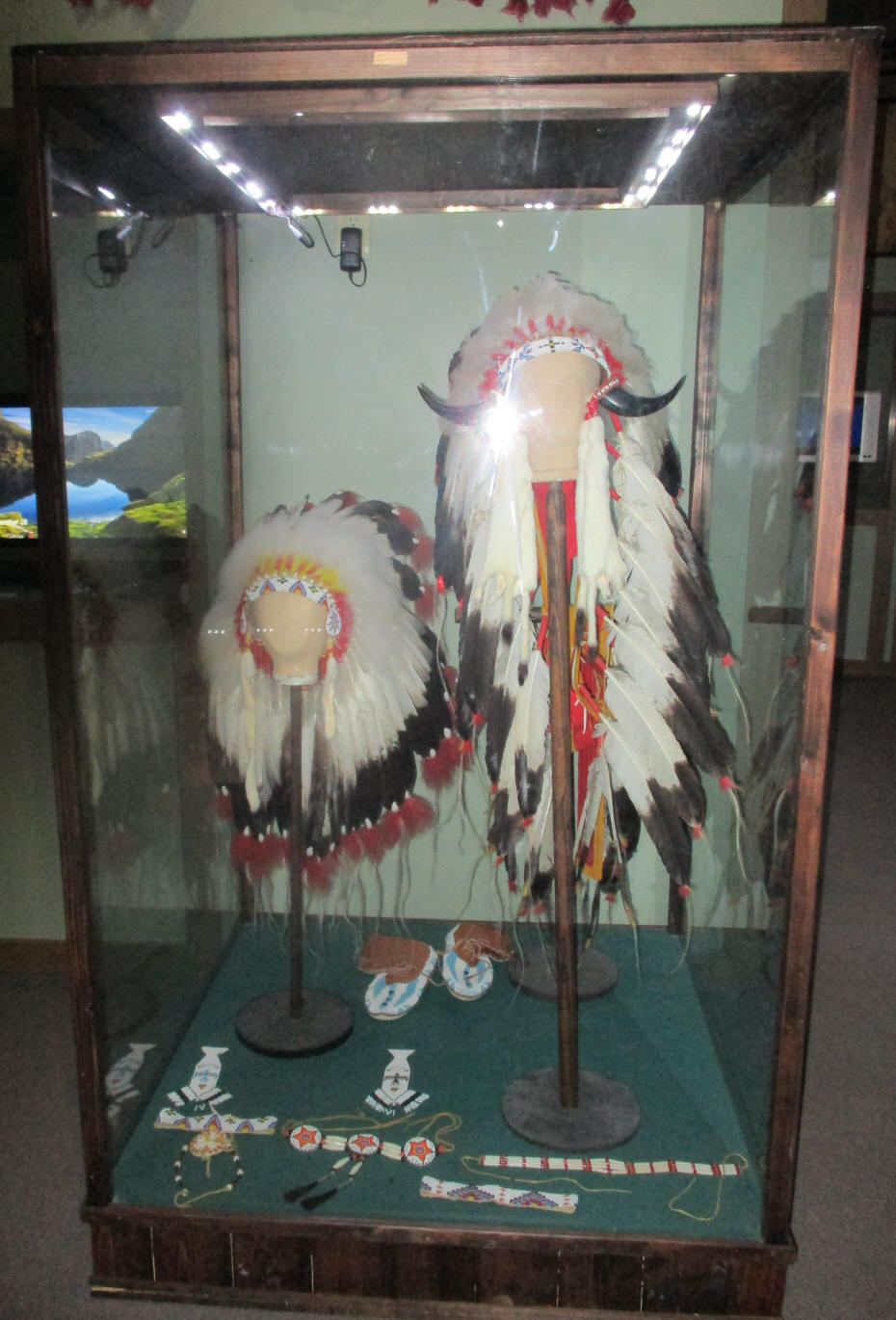
The museum has quality exhibits that
range over the historical eras of the fort.
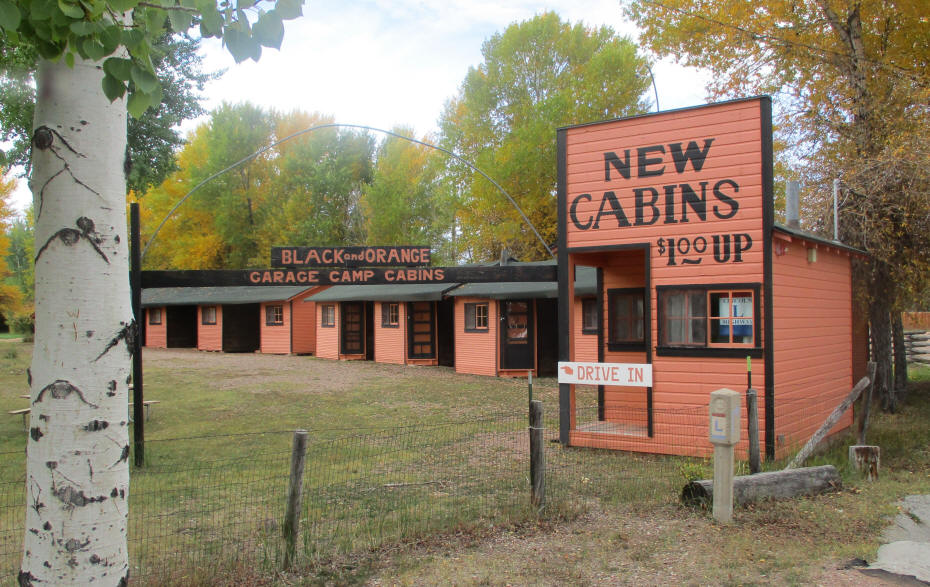
Near the entrance to the historic site
are a set of black and orange cabins built in the 1920s and
1930s when the Lincoln Highway ran right in front of the
property. They are one of the last-surviving examples of a
Lincoln Highway motor court remaining in Wyoming.
Nearby
One diorama included in the museum exhibits
is a stone charcoal kiln, which includes a video explaining the
nearby Piedmont Charcoal Kilns state historic site. There is
some very interesting charcoal making history involved and
Piedmont is a worthy addition to a stop at Fort Bridger.
Piedmont is also a ghost town with a few buildings left and an
interesting cemetery. There is also a fascinating national
monument in the area: Fossil Butte. If your interest ranges from
forts to charcoal kilns, one of the nation's top fossil sites
might also prove to be interesting.
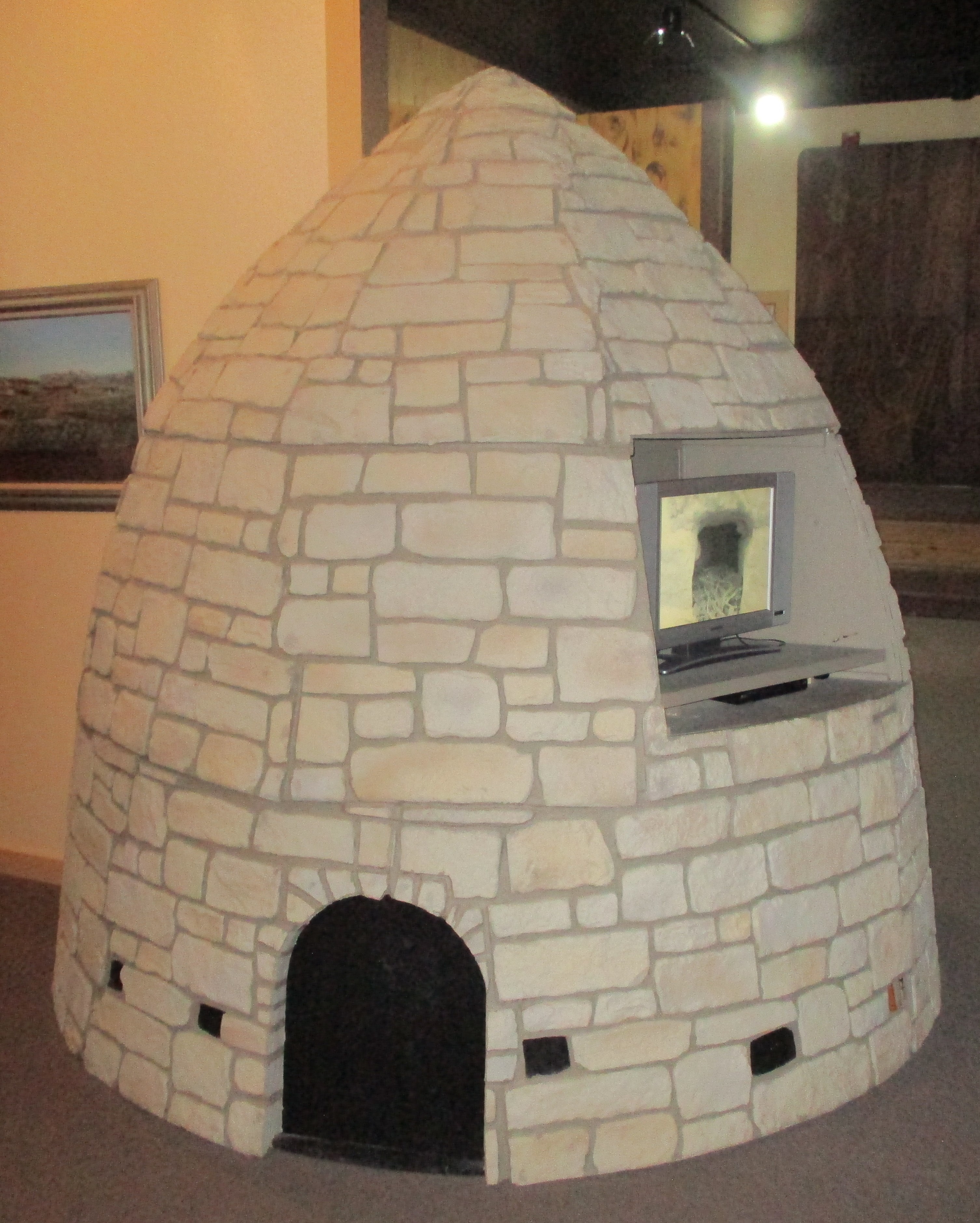
The diorama of a charcoal kiln is
unusual enough to easily capture the visitor's attention and
after watching the video many a visitor will trek down the road
to the ghost town and kilns.
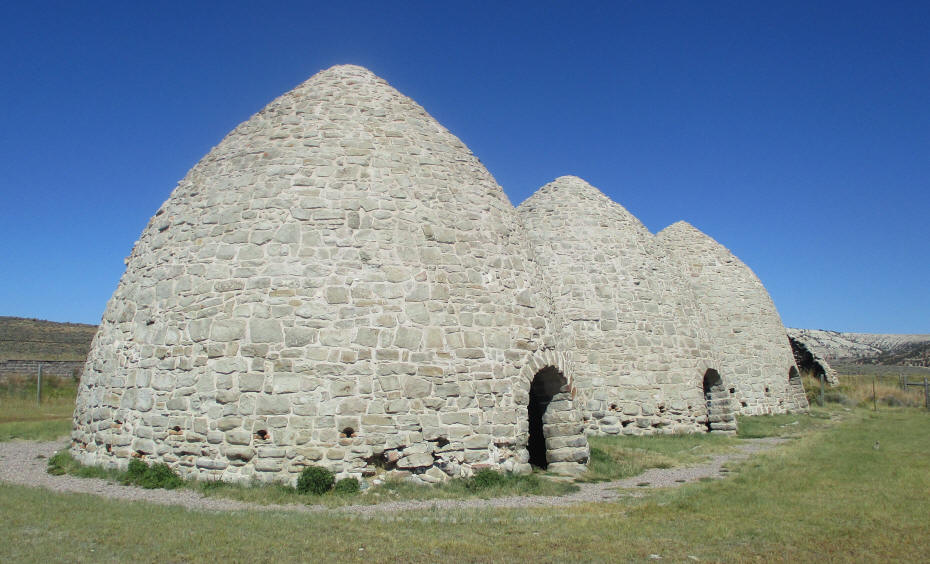
The Piedmont Charcoal Kilns and ghost
town are well-worth a short trip to the nearby historic site.
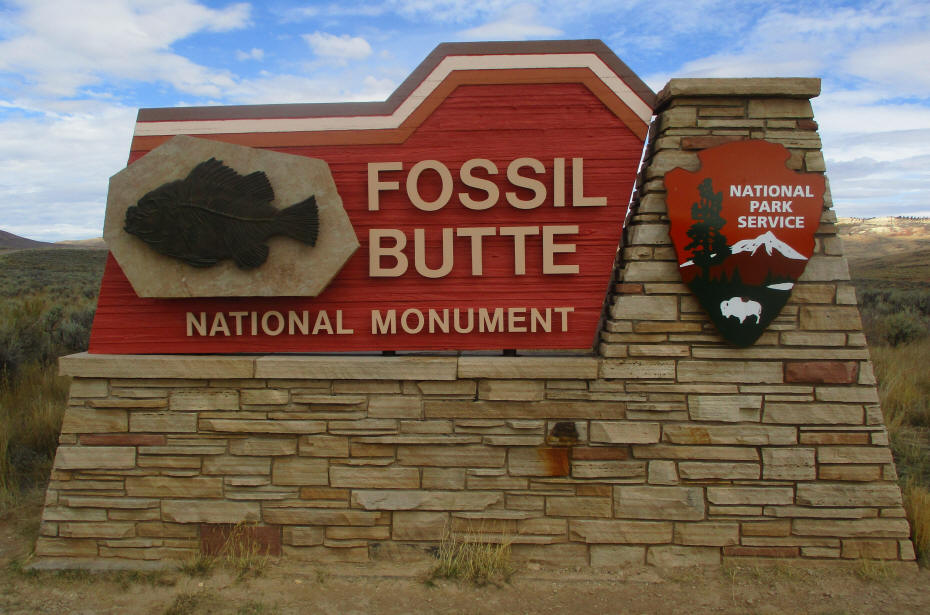
Fossil Butte National Monument is one
of the richest fossil sites in the country and includes a museum
worth the short trip from Fort Bridger.
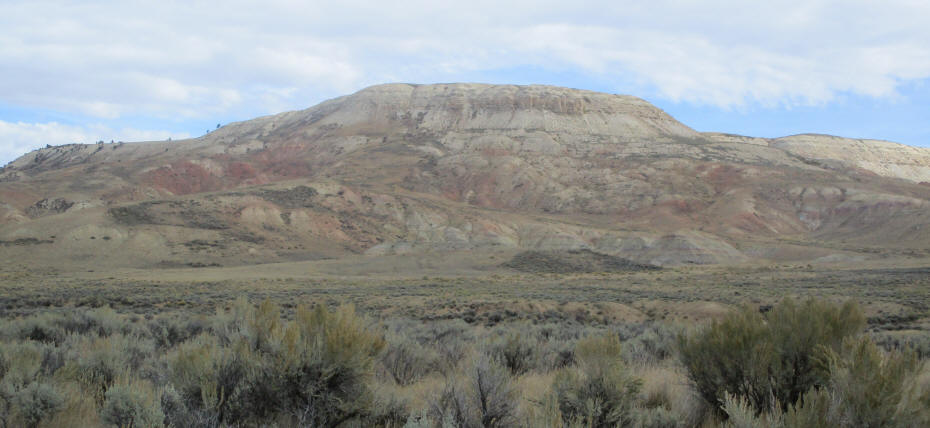
Fossil Butte is a very large butte.
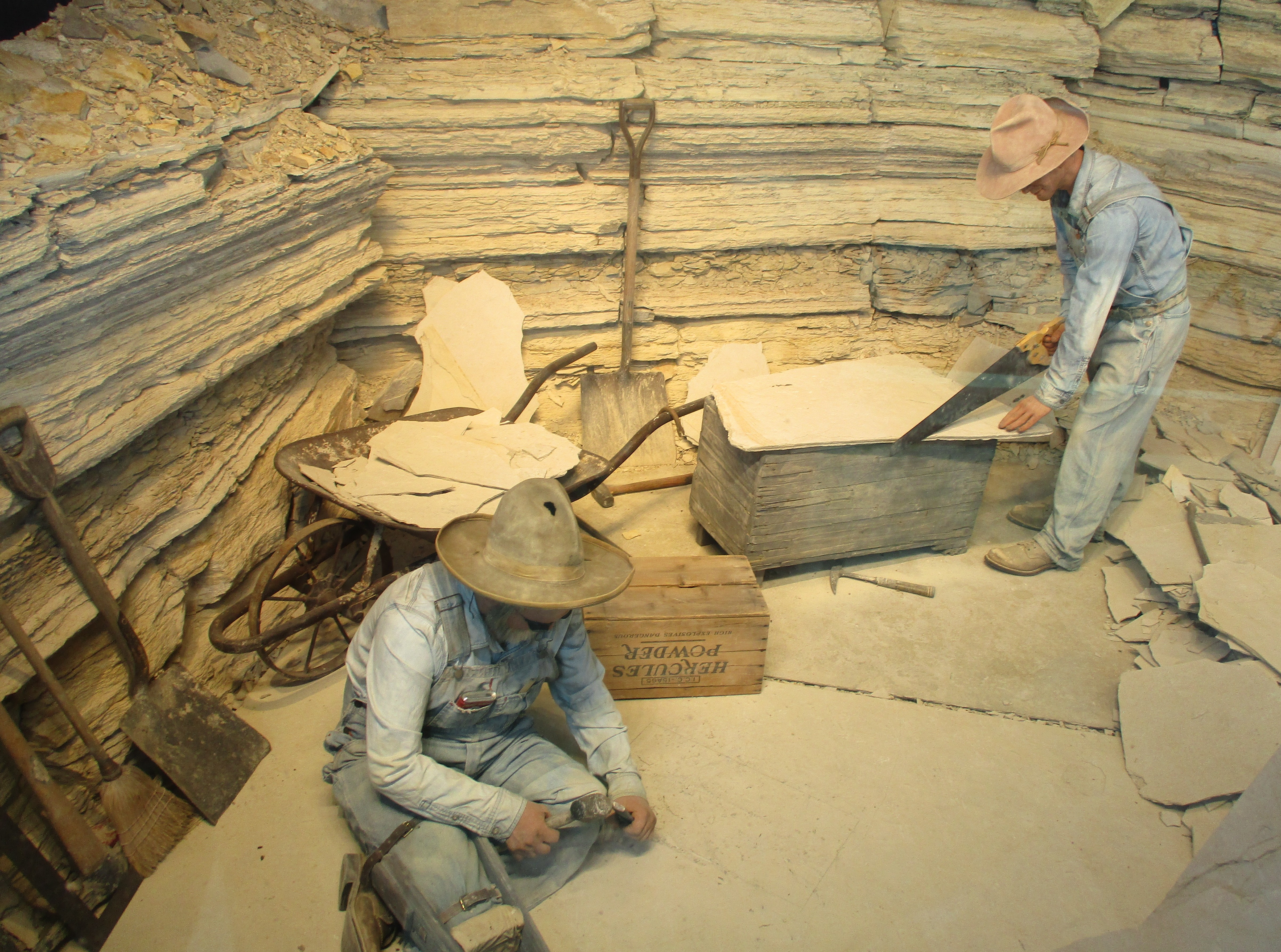
The museum includes exhibits detailing
fossils and their collection.
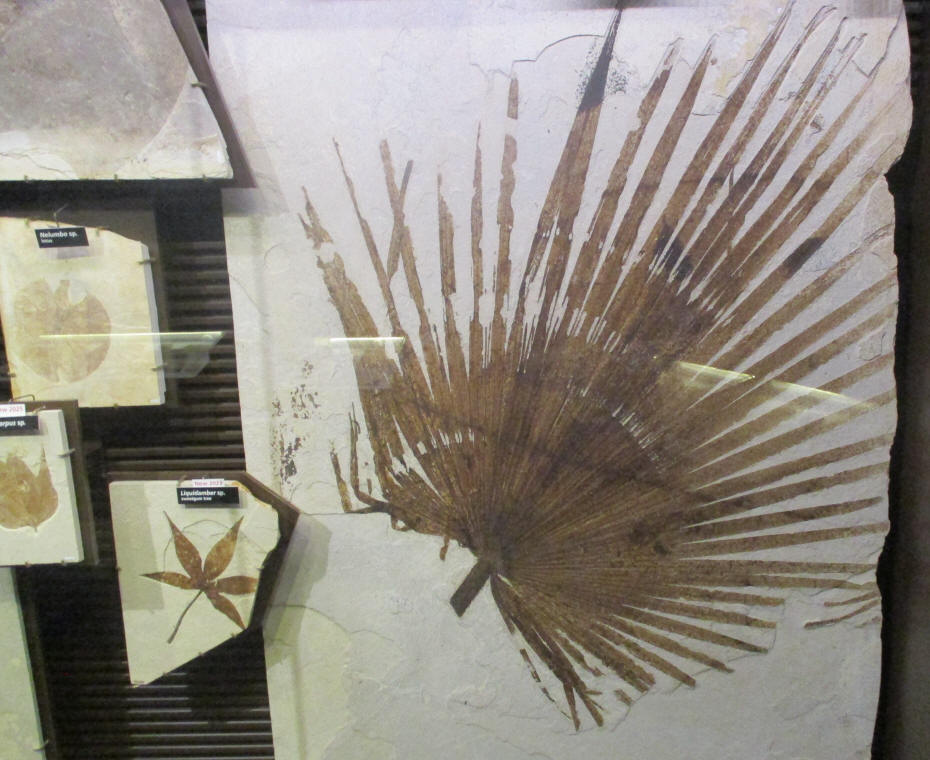
There are
thousands of fossils on display, plant, animal, and everything
in between.
Author/Photographer. Tom Straka is
an emeritus professor of forestry at Clemson University in South
Carolina. He has an interest in history, forestry and natural
resources, natural history, and the American West.
Public
Disclosure Please Read FTC has a law
requiring web sites to let their readers know if any of the
stories are 'sponsored' or compensated. We also are to
let readers know if any of our links are ads. Most are not.
They are just a way to direct you to more information
about the article where the link is placed. We have several ads
on our pages. They are clearly marked as ads. I think
readers are smart enough to know an ad when they see one but to
obey the letter of the law, I am putting this statement here to
make sure everyone understands. American Roads and Global
Highways may contain affiliate links or ads. Further, as their
bios show, most of the feature writers are professional travel
writers. As such we are frequently invited on press trips, also
called fam trips. On these trips most of our lodging, dining,
admissions fees and often plane fare are covered by the city or
firm hosting the trip. It is an opportunity to visit places we
might not otherwise be able to visit. However, no one tells us
what to write about those places. All opinions are 100% those
of the author of that feature column.
|