|
Visiting Gettysburg Battlefield
Story and photos
by Kathleen Walls
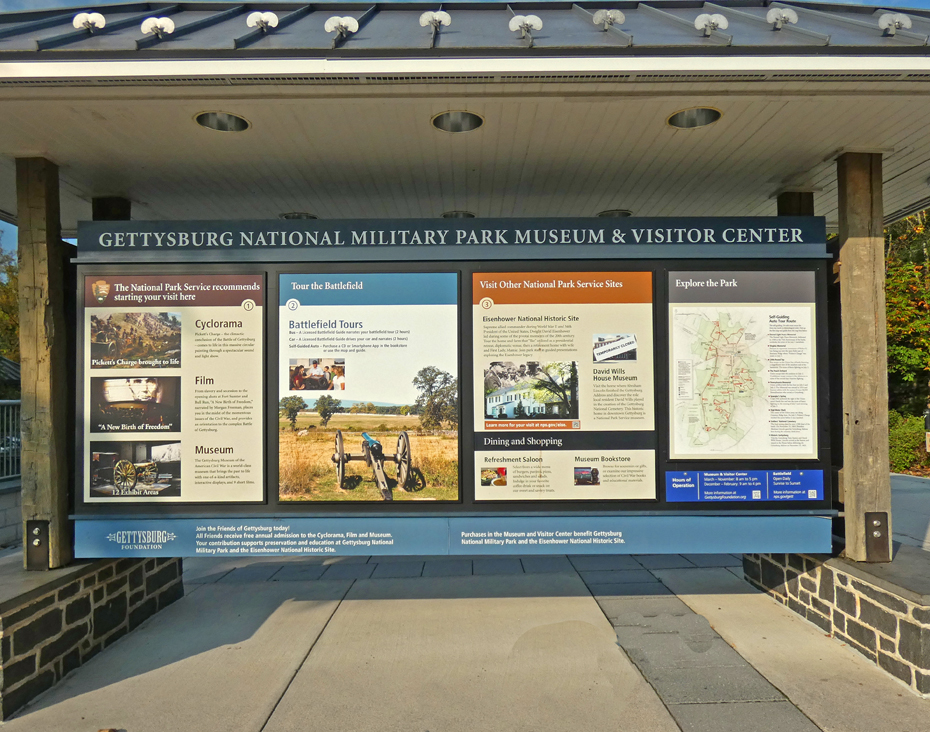
Gettysburg is possibly the most
important Civil War battle because it was a major turning point
in the war. It ended Confederate General Robert E. Lee's hope of
an invasion of the North, with his troops suffering casualties.
It, along with the Union victory at Vicksburg the same month,
boosted Union morale, and was a significant factor in President
Lincoln winning his second term. Gettysburg is where any history
lover needs to visit.
I had researched a lot of Civil War history
when writing my War in the West series and especially Vicksburg
for the second book in the series,
Under a Black Flag,
but not so much Gettysburg, so I learned a lot on my trip there.
Since the battlefield ranges over 17.75
square miles, and
Gettysburg National Military Park is about 6,000 acres and
has over 1400 monuments, markers and plaques, it's impossible to
see it all in one visit. Things are always changing as new items
are still being unearthed. Ranger Jason told us, "There's a
piece of unexploded ordnance that was found and lots of other
interesting pieces that were found as well."
The Gettysburg Battlefield Visitor Center
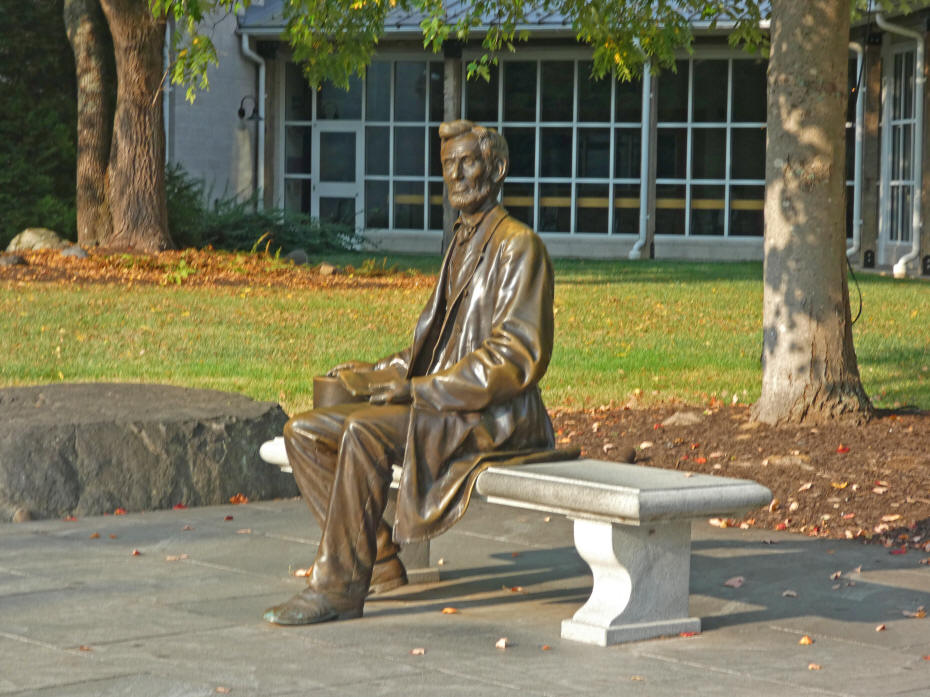
Just outside the Visitor Center we were
greated by a staute of Abraham Lincoln sitting on a bench. The
center houses many facilities telling about the battle, and
there are exhibits on the wall. A great place to start your tour
is the film "A New Birth of Freedom," which gives an overview of
the battlefield.
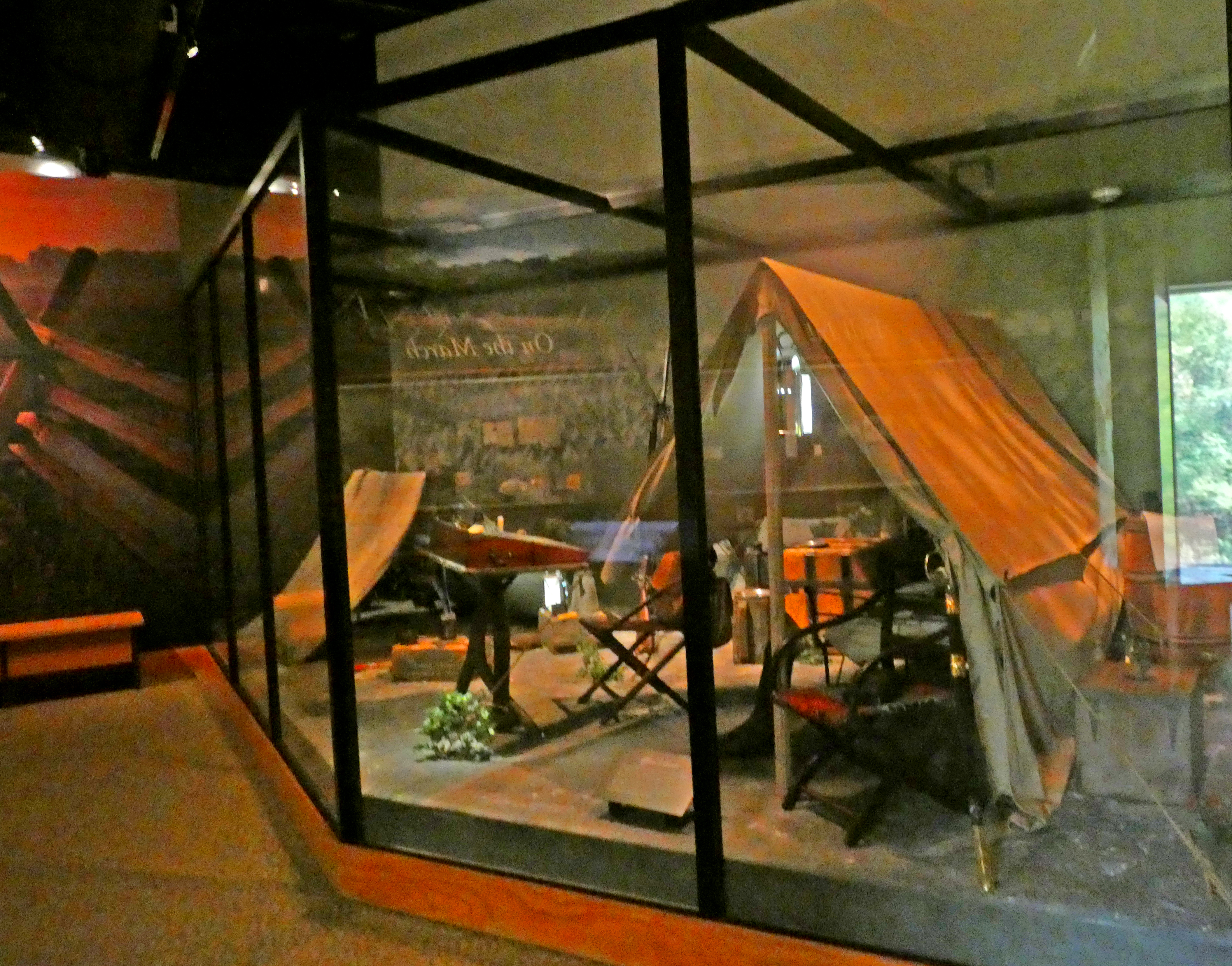
At the park museum, there's a timeline of
the battle and lots of information. The museum is divided into
multiple galleries telling not only about the Battle of
Gettysburg, but John Brown's raid, Lincoln's "Gettysburg
Address," and some other battles. One exhibit shows what a
soldier's life was like with a tent and the things he would have
had with him.
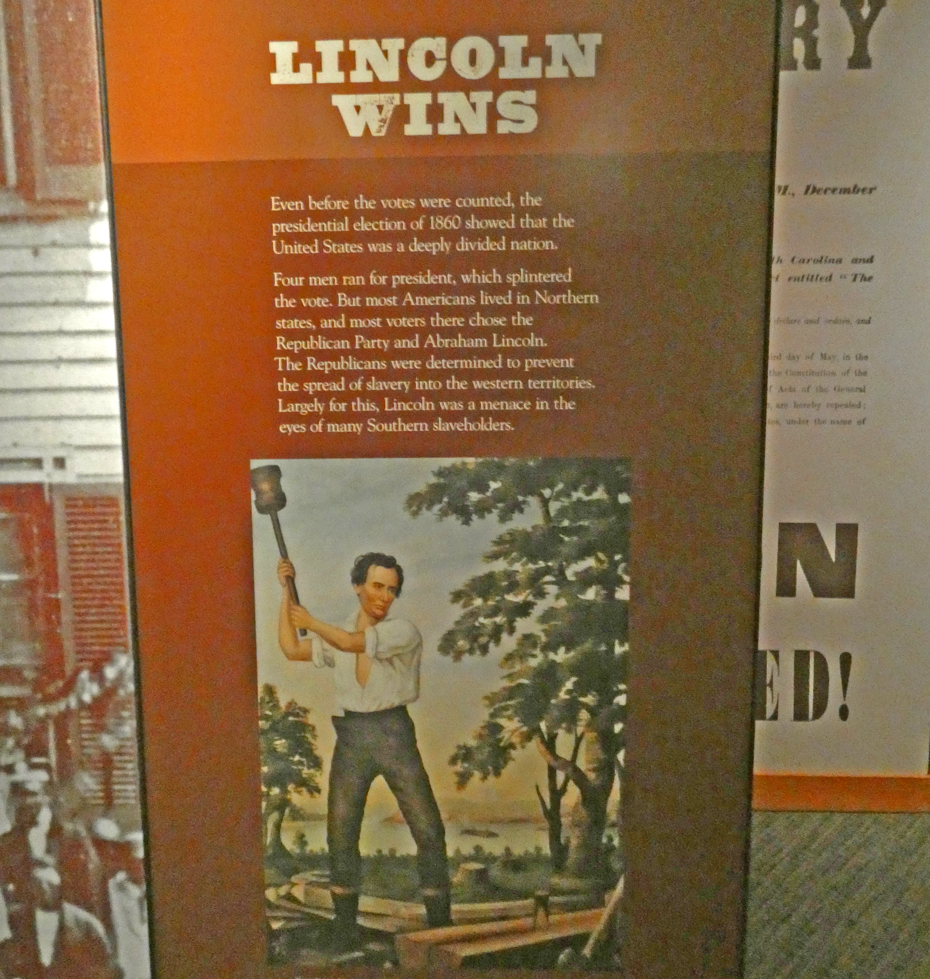
Another exhibit tells about Lincoln's
winning the election. There are some showing earlier battles and
another called "Voices of the Confederacy." There's an exhibit
about Eisenhower, who retired to Gettysburg after his
presidency.
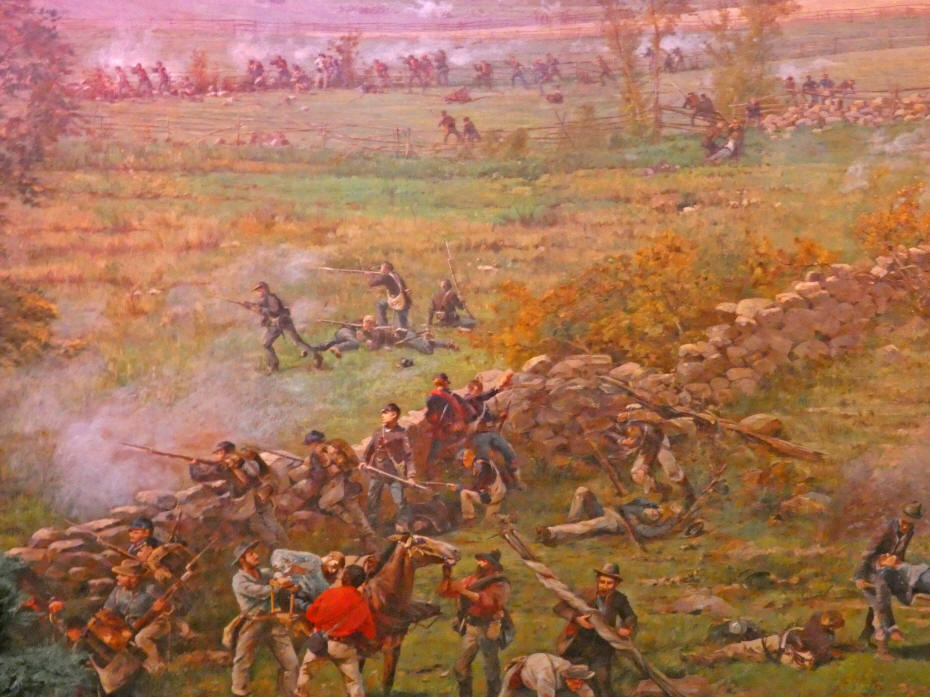
Do not miss the Cyclorama, created in 1884
by French artist Paul Philippoteaux. It's a 360-degree
hand-painted canvas depicting Pickett's Charge that is longer
than a football field and taller than a four-story building. The
cyclorama, which surrounds you and is active. You see and hear
the cannon firing, see the smoke and soldiers that seem to move
as the battle occurs. The background shows the area portrayed
realistically. There's Little Round Top, Devil's Den, and key
locations of the battle.
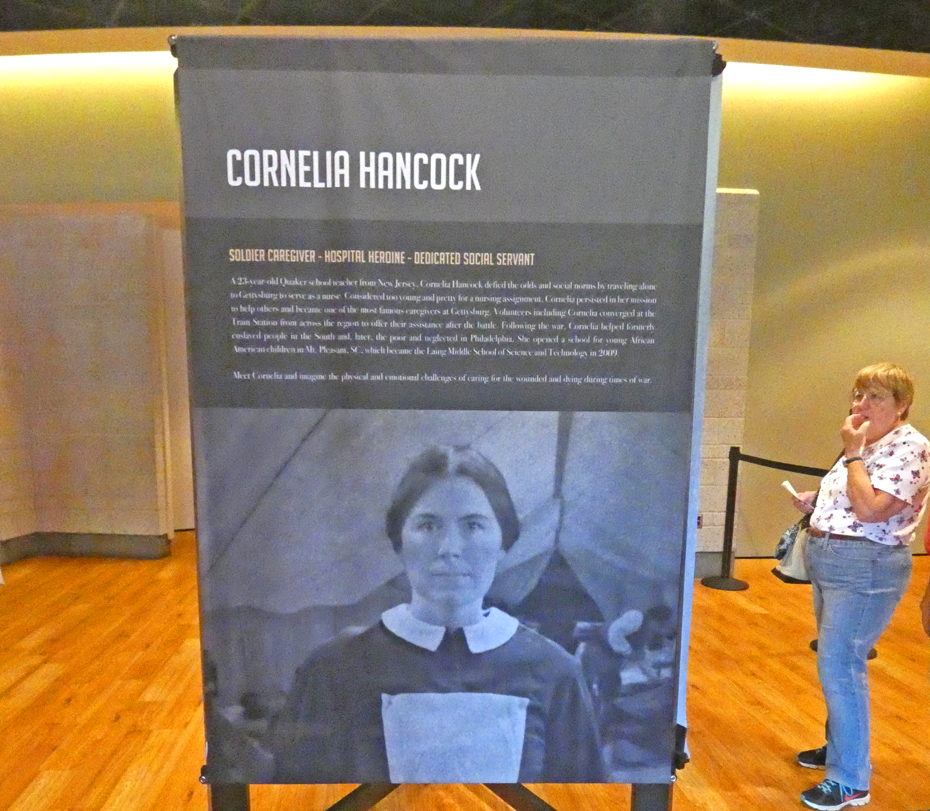
A new activity in the Visitor Center is a
virtual reality exhibit, Ticket to the Past, that takes you to
1863, where you view through the eyes of one of three people:
Cornelia Hancock, Eli Blanchard, or Basil Biggs as they arrive
for Lincoln's Gettysburg address at Gettysburg's historic railroad station.
Gettysburg Battlefield Carriage Tour
We toured the park in a
Victorian Carriage Company horse-drawn carriage tour with
Judy Morley, a
Gettysburg licensed battlefield guide. Judy gave us a good
overall picture, and the carriage ride had a historical feel.
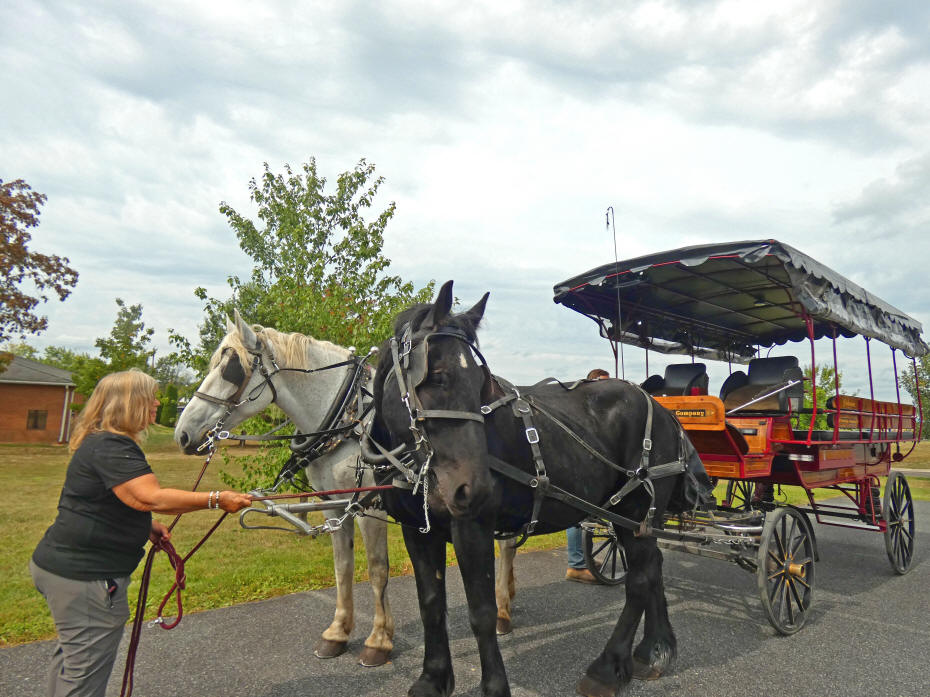
On the way to the battlefield, Judy gave us
a lot of background leading up to this battle. "The North had
more industrial capability, more railroads, more men, more
money, more machinery. Despite that, the South kept winning.
Robert E. Lee had his two greatest victories in the ten months
right before the Battle of Gettysburg. In December 1862 and then
in May 1863, Robert E. Lee had won the Battles of Fredericksburg
and the Battle of Chancellorsville. And these were won against
all odds, he did crazy, against-the-textbook maneuvers and still
won."
She told us why Gettysburg was so important
to the South. "In June of 1863, Robert E. Lee has a problem.
That 100 miles between Washington D.C. and Richmond, Virginia is
picked clean. There's been two years of war. The two armies
together numbered about 165,000 people. And if you had those two
armies together, that would be the fourth-largest city in the
United States at the time. Here you are in this rural agrarian
area, and you've got 165,000 people trying to eat off the land.
And so farmers couldn't grow crops. No livestock were left.
Everything was picked over.
"So in June 1863, Robert E. Lee comes up
with this plan to invade the North. And he wants to do three
things. He wants to give that 100 miles between D.C. and
Richmond time to heal and grow some crops and get the land to
come back and just allow some food to grow in that area again.
He also related, he wants to come into Pennsylvania, which
hasn't had all these years of war, and raid it, get crops, get
livestock, get supplies, famously, supposedly get shoes and all
of these other things that the South was chronically low on. And
then his third goal was to take advantage of the anti-war
sentiment that was going on in the North. You know, the North
was not unanimously for the Union. There were a lot of
dissenters in the North who were ready to just negotiate a peace
and let the Confederacy go. And Robert E. Lee knew that. And so
he wanted to leverage that thinking that if he scored this huge
victory on Northern soil that the peace movement in the North
might win at the polls and just negotiate a settlement and let
the South go.”
She told us the battle began on July first,
1863, and ran through the third. As we rode through, she
explained the skirmishes that occurred. The cannons on the
battlefield today are placed to show where cannons actually
were.
Gettysburg Battlefield Monuments
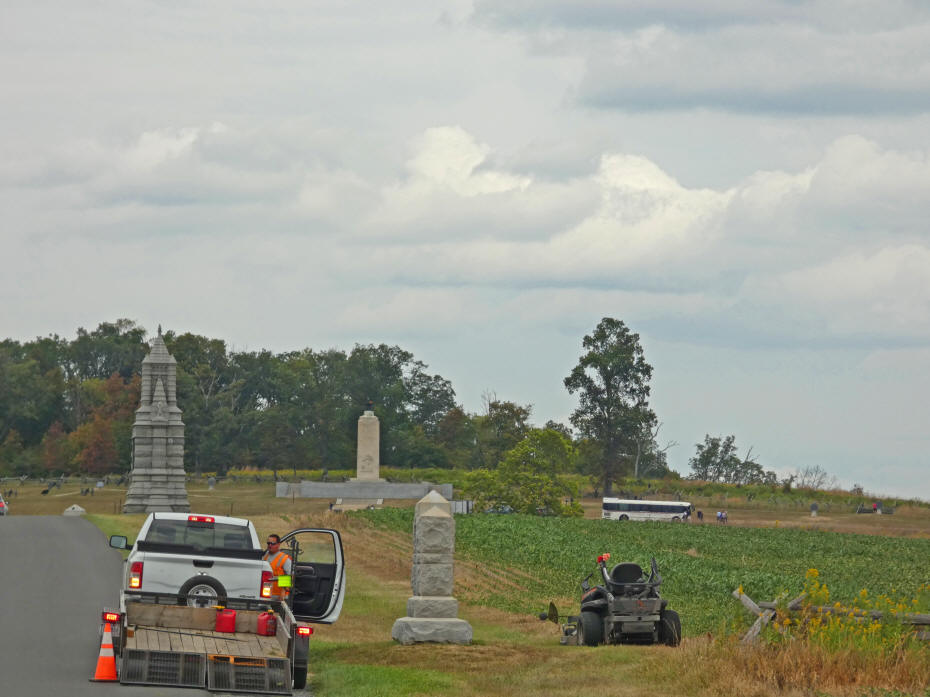
The first monument we reached was the
obelisk dedicated to John Reynolds, the first and
highest-ranking officer killed in the first 30 minutes of the
battle. He arrived here, the battle started about 10 o'clock in
the morning. By 1030, John Reynolds is leading from the front,
urging his men into the woods, and he is shot in the back of the
head and killed.
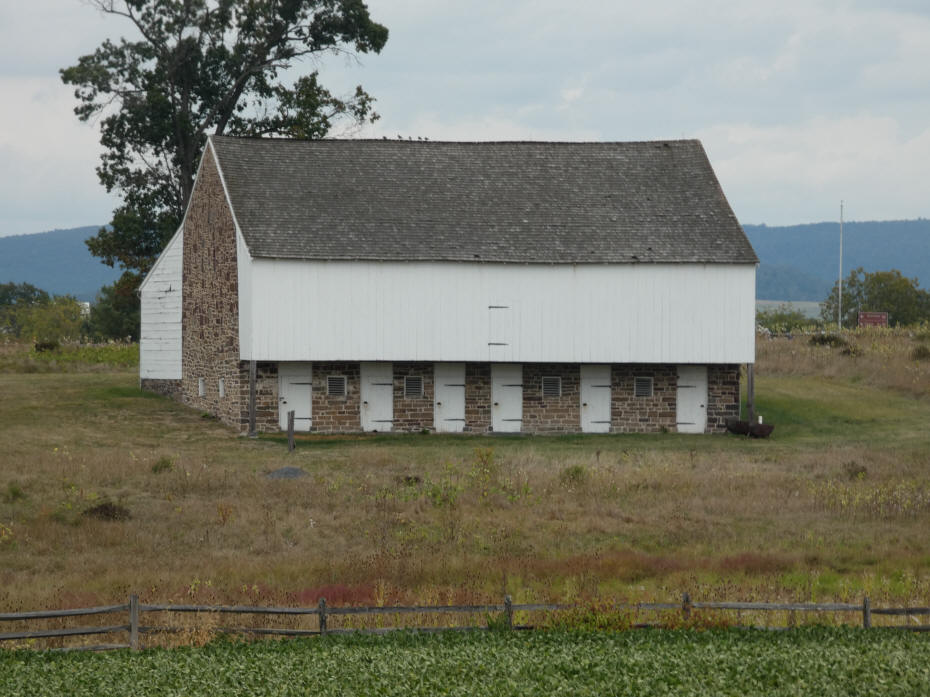
We passed McPherson's Ridge. The house
burned down, but the barn remains. It was owned by Edward
McPherson. He wasn't living there at the time; he was renting it
out to another family. McPherson had been asked by Abraham
Lincoln to head up this new department in Washington, DC, that
was raising revenue for the war. We know it today as the IRS.
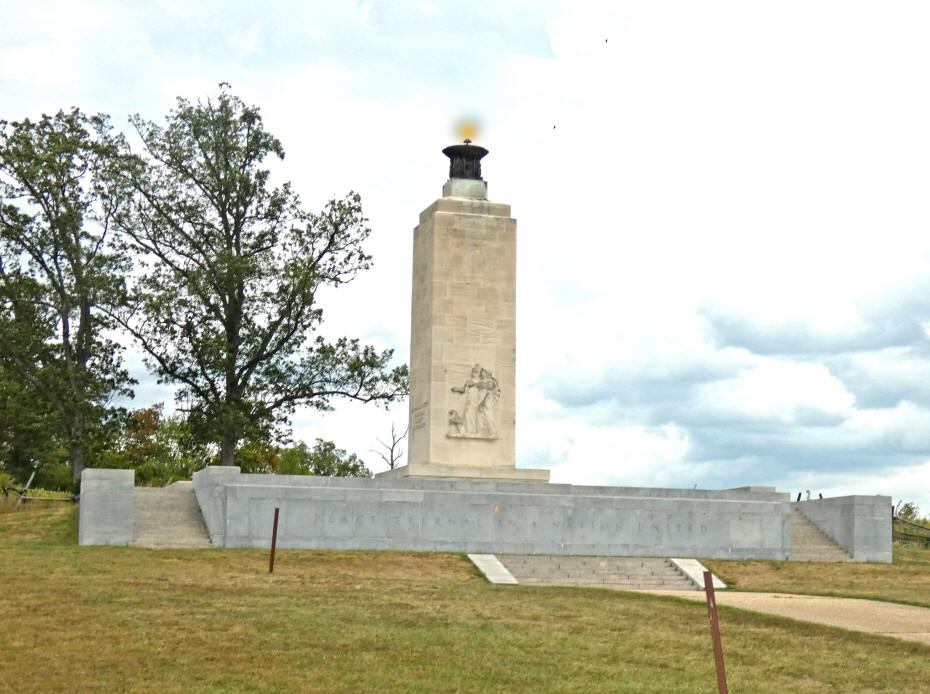
The Eternal Flame at the top of a hill
burns at the Eternal Life Peace Memorial. It was dedicated on
the 75th anniversary of the battle. Franklin D. Roosevelt was
the president then, and there were still 18 veterans from the
battle still alive.
The bottom of the monument is granite from
Maine, and the top is limestone from Alabama. Its inscription
reads, "Peace, eternal, and a nation united." The eternal flame
burns at the top. An interesting fact, 100 years after the
battle in March 1963, John and Jacqueline Kennedy came to
Gettysburg, and they saw the Eternal Light Peace Memorial.
Jacqueline Kennedy was very impressed by the memorial. The Park
Service invited President Kennedy to speak on November 19th,
1963 for the 100th anniversary of Lincoln's Gettysburg Address,
but he declined because he had to be in Dallas that week. What
happened in Dallas that week changed history again. Instead of
coming to Gettysburg, he went to Dallas, where he ended up being
assassinated.
Some letters and stories say that
Jacqueline Kennedy placed an eternal flame on JFK's grave
because she remembered what she had seen here at the eternal
flame monument.
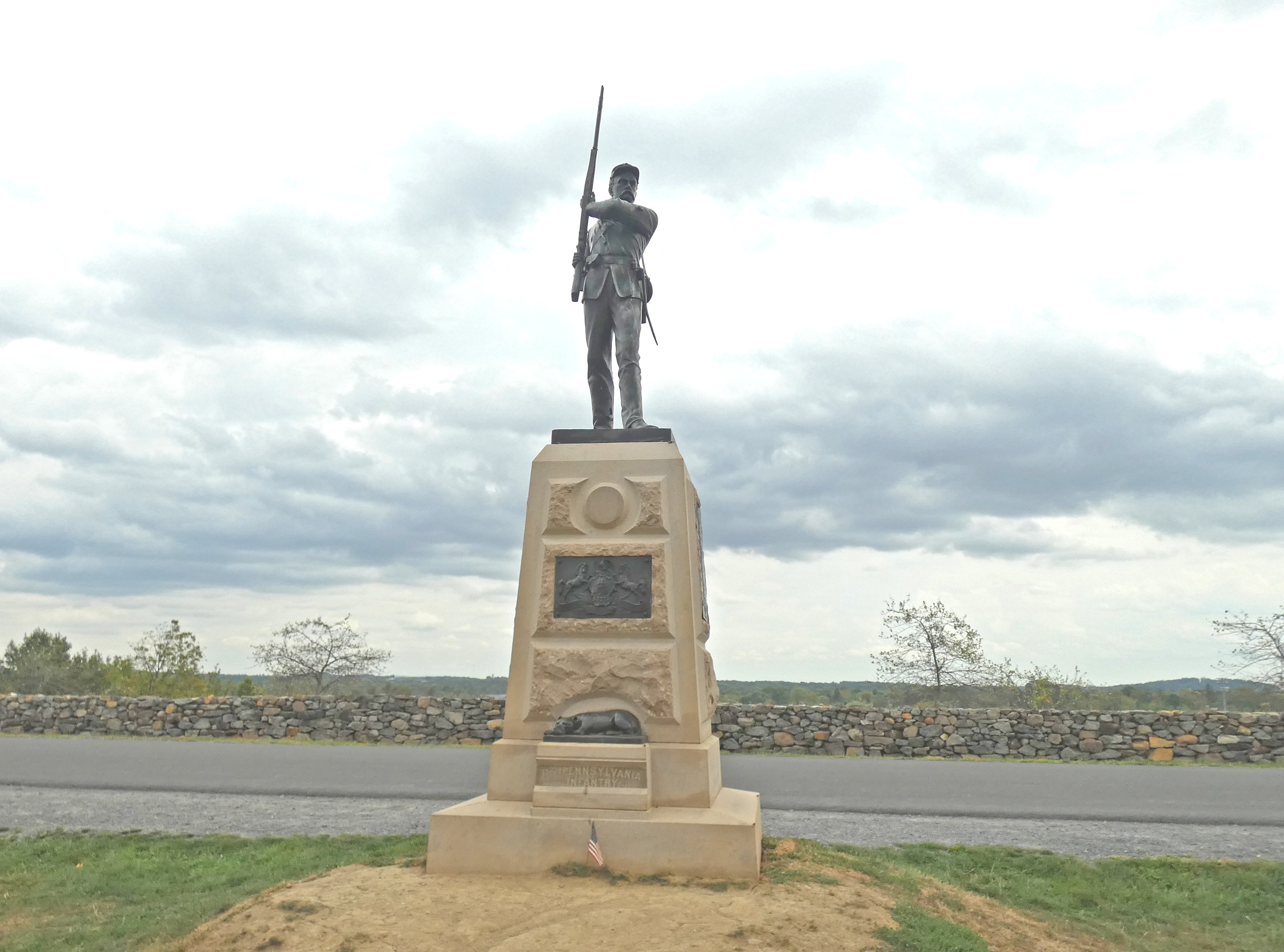
Another moving monument is the 11th
Pennsylvania Monument with a bronze likeness of Sallie, their
Staffordshire terrier mascot. During the battle, the 11th
Pennsylvania Volunteer Infantry then had to retreat, leaving
their dead and wounded on the field. Sallie was separated from
the unit and three days later found guarding the wounded
soldiers. She is one of only two dogs memorialized at the
battlefield park.
She continued to serve with the 11th PA for
two more years until she was killed by a bullet at the Battle of
Hatcher's Run in February 1865. When the surviving veterans
dedicated a monument to the 11th Pennsylvania Infantry at
Gettysburg in 1890, they had a sculpture of Sallie placed on the
monument.
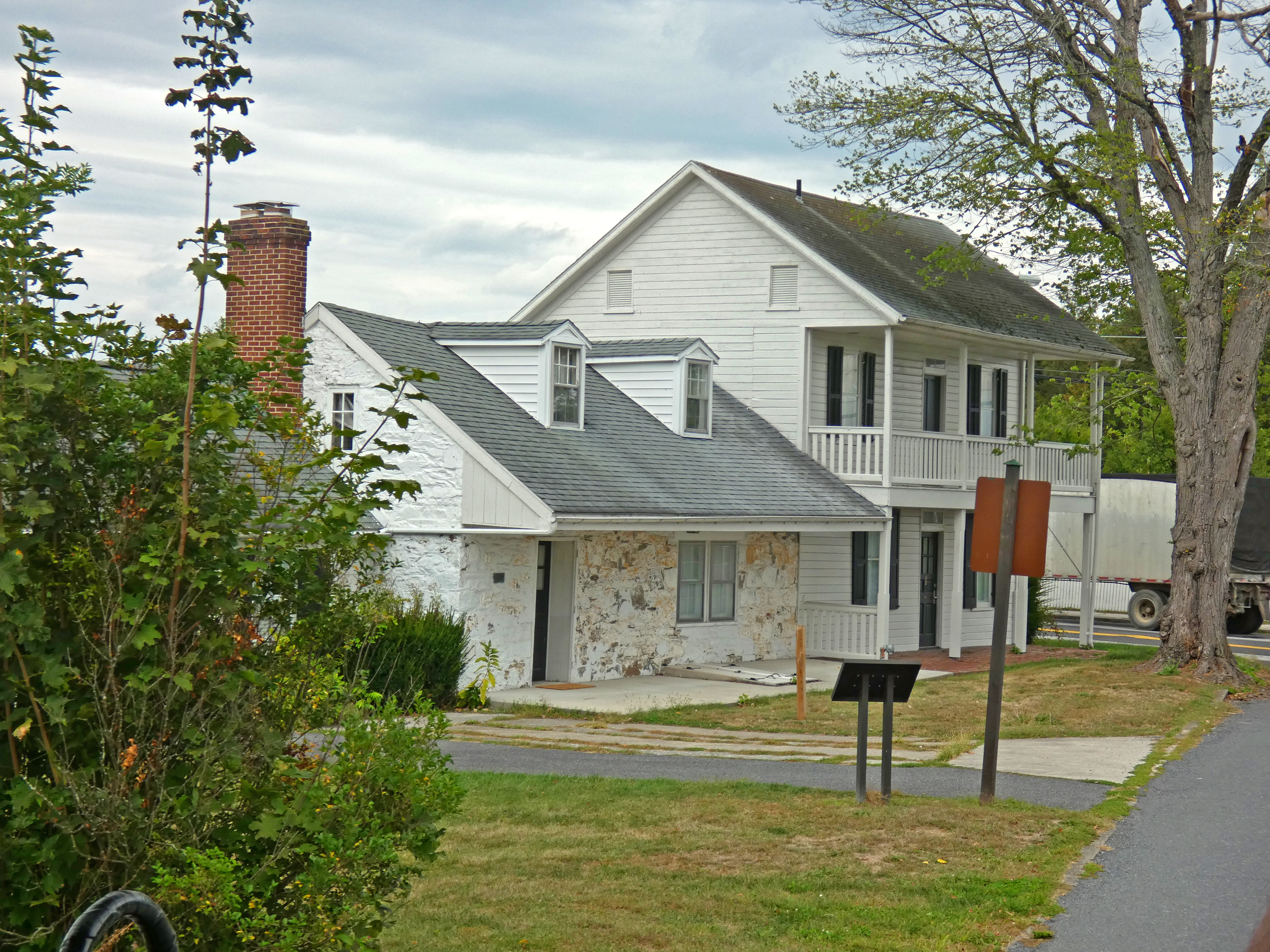
As we left the park, we passed a little
stone cottage with a white picket fence that was General Lee's
headquarters at the end of the first day. It was occupied at the
time of the battle by a widow named Mary Thompson. She stayed
there in her home the entire time.
She said she "never cooked a meal for no
rebel." However, somebody cooked there. Her kitchen was used by
Lee's orderly.
This is just a touch of what it's like
touring the battlefield. Judy gave us a lot of the battle
information as we drove by. For a step back in history, go see
it for yourself.
Public
Disclosure Please Read FTC has a law
requiring web sites to let their readers know if any of the
stories are 'sponsored' or compensated. We also are to
let readers know if any of our links are ads. Most are not.
They are just a way to direct you to more information
about the article where the link is placed. We have several ads
on our pages. They are clearly marked as ads. I think
readers are smart enough to know an ad when they see one but to
obey the letter of the law, I am putting this statement here to
make sure everyone understands. American Roads and Global
Highways may contain affiliate links or ads. Further, as their
bios show, most of the feature writers are professional travel
writers. As such we are frequently invited on press trips, also
called fam trips. On these trips most of our lodging, dining,
admissions fees and often plane fare are covered by the city or
firm hosting the trip. It is an opportunity to visit places we
might not otherwise be able to visit. However, no one tells us
what to write about those places. All opinions are 100% those
of the author of that feature column.
|