| Some of our stories contains affiliate links. If you make a purchase through an affiliate link, we may receive compensation at no extra cost to you. For more information see our
Privacy Page. |
10 Free Things to do in Milwaukee
Story and photos
by Kathleen Walls
Beer might be what made Milwaukee famous
but there is a lot more to see there besides breweries. To
sweeten the pot, there are lots of free attractions. Here are
some of the free treasures I discovered on my recent visit.
Lakeshore State Park
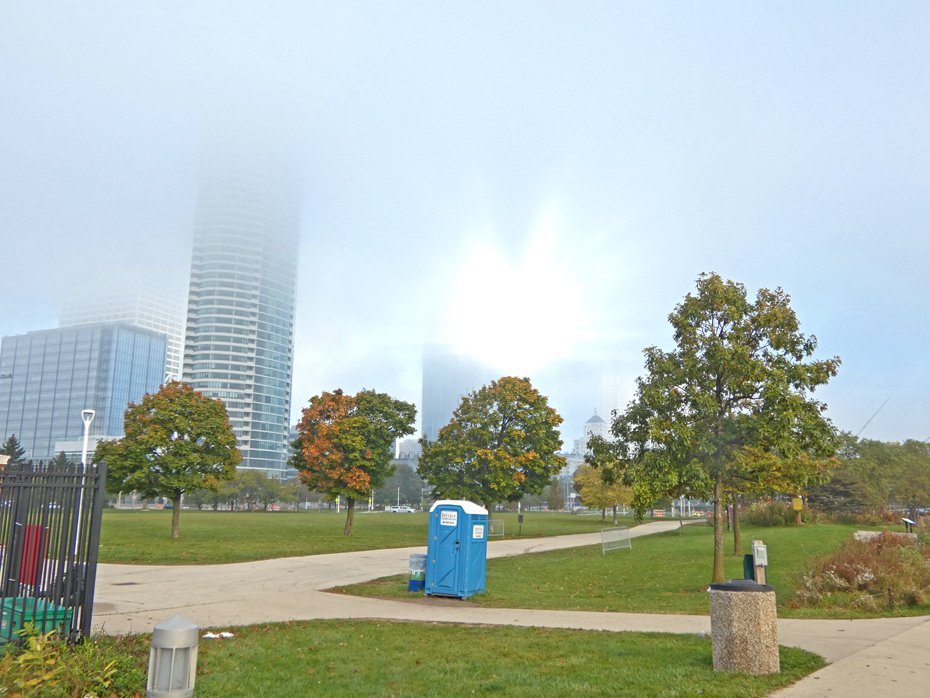
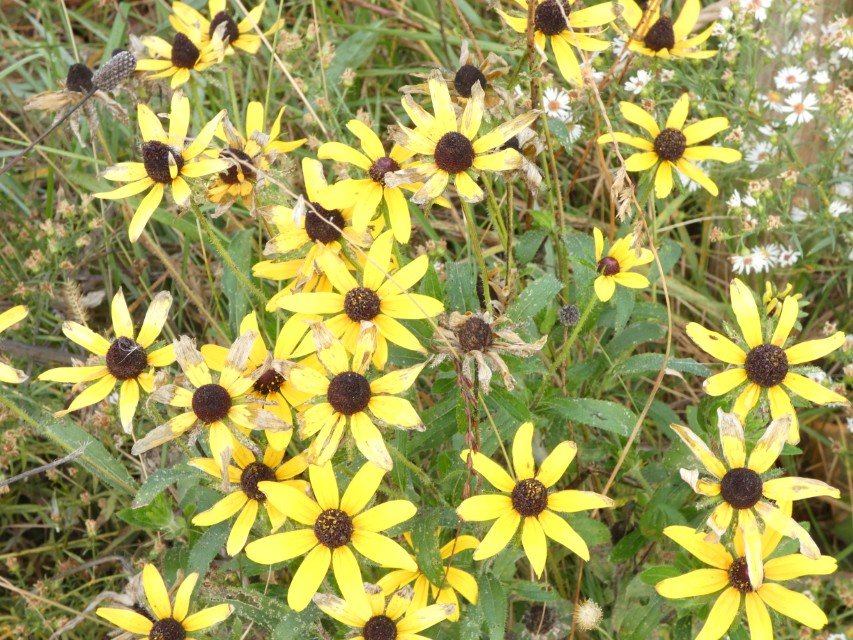
Lakeshore State Park offers a great place to hike to see
some of Milwaukee's best prairie plants. It's near the Milwaukee
piers in Lake Michigan. Besides a paved walkway with splendid
views of Lake Michigan, there are trail marker signs telling
about the park and lake.
My favorite was the Tanner Maritime Trails
Marker telling the story of a famous wreck on the lake. No, it's
not the Edmond Fitzgerald. It's the equally important
wreck of the Tanner, which departed Milwaukee on
September 9, 1875, headed for Buffalo, New York, with a cargo of
wheat. It sank in a storm on September 10, 1875. Only the
captain died, and the rest of the crew was rescued. The wreck
triggered the establishment of Milwaukee's U.S. Life-Saving
Station No. 10 in 1876. It's believed that remains of the vessel
were located near Jones Island in 2018.
Milwaukee Art Museum
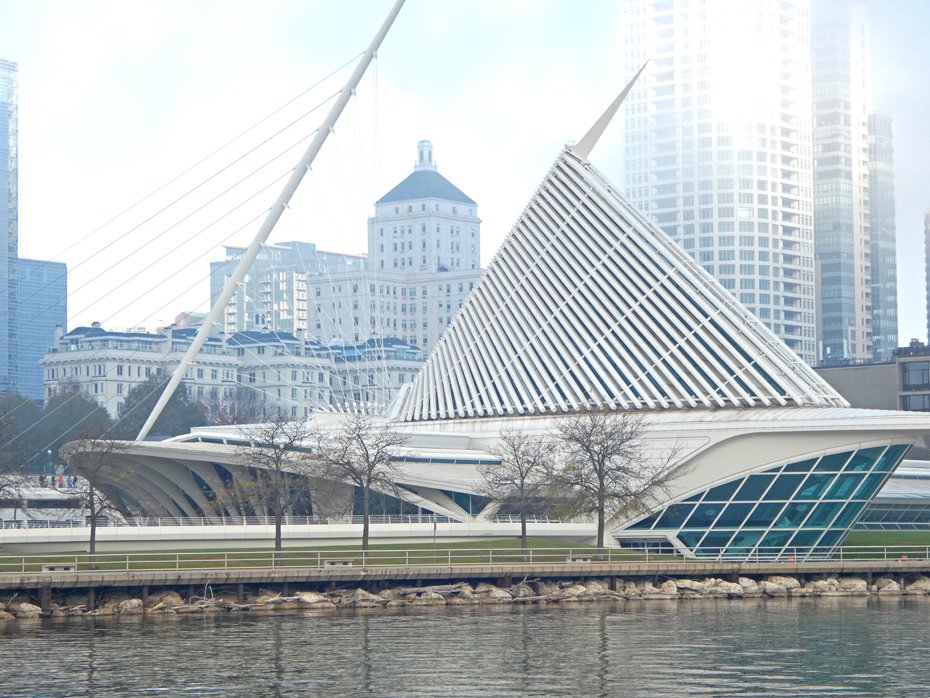
Milwaukee Art
Museum is walking distance from Lakeshore Park and is free
on Thursday nights from 4 p.m. to 8 p.m. If you have a Bank of
America credit or debit card, the Milwaukee Art Museum offers
free admission on the first full weekend of each month.
The museum is one of the most unusual
building I have ever seen. It has a movable, wing-like sunscreen
with a 217-foot span Burke Brise Soleil that folds and unfolds
daily.
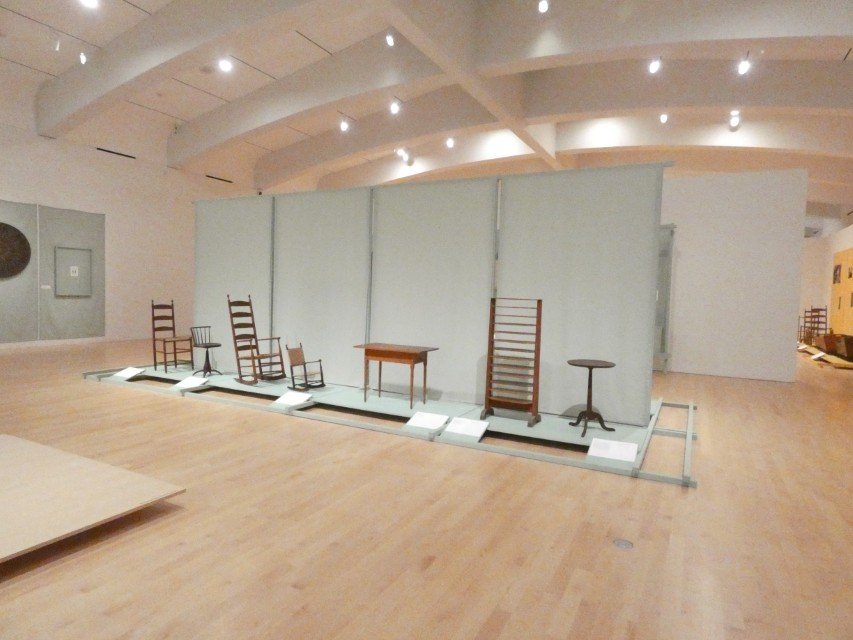
The museum is Wisconsin's largest art with
over 34,000 art pieces ranging from ancient to present including
paintings, pottery, glassware, jewelry, and more. It's hard to
pick a favorite out of such an extensive collection, but I loved
a temporary exhibit, "The Shakers: A World in the Making," which
will be shown through January 31, 2027.
Milwaukee War Memorial Center
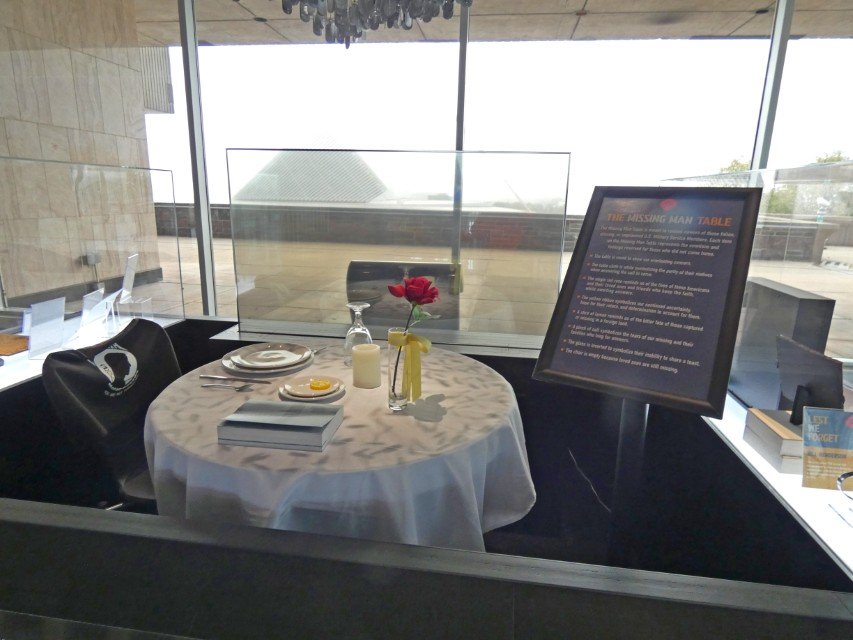
Located just beyond the Art Museum, you'll
find the War
Memorial Center. It's a beautiful story of
horrific wars and heroic people who fought in them. My favorites
here are the Vietnam War section and the Missing Man Table.
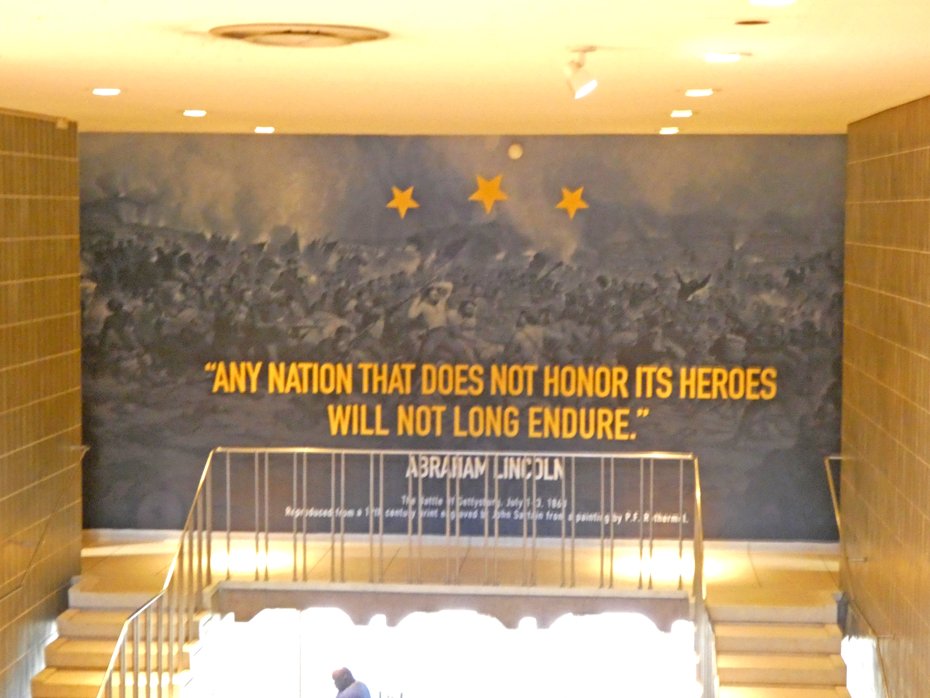
Don't miss the stature of Abraham Lincoln
in the courtyard.
Public Market
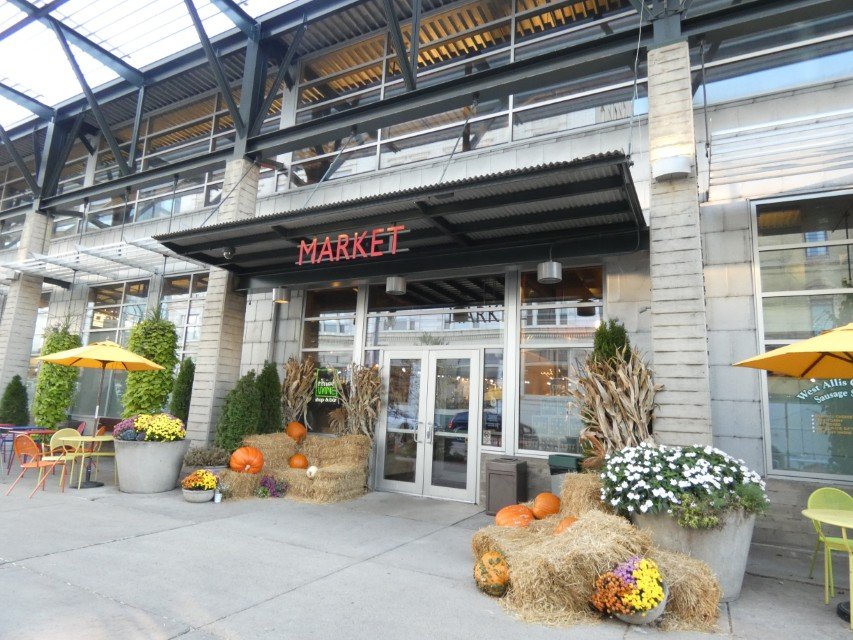
Public Market
in downtown Milwaukee was inspired by Italian immigrants that
built the Historic Third Ward. During the 19th century, the
Historic Third Ward was a major hub for warehousing, wholesale
food, and moving farm produce into the city. Today’s market is
just across from Commission Row, where wholesale fruit and
vegetable dealers once operated. Milwaukee has a long tradition
of public markets from that time. The present market opened in
2005.
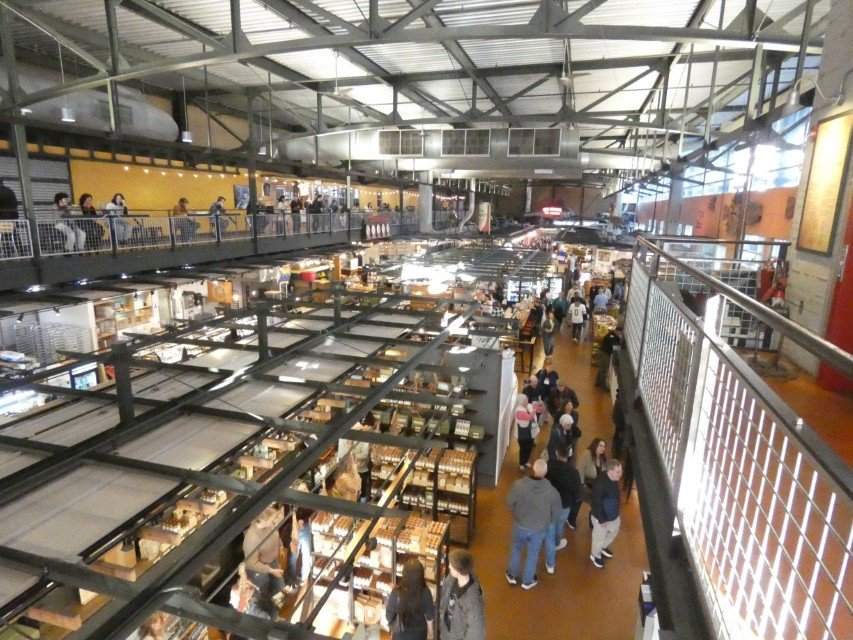
Allison, the Event and Hospitality Manager
at the market, gave us some of the history of the market. In
1892 a major fire destroyed the Cross Keys Hotel on this site;
it was one of the first to have running water. It's famous as a
hotel where Abraham Lincoln bathed during an 1859 visit to
Milwaukee. Today, the Third Ward is filled with art galleries,
boutique shops, and restaurants, and the public market serves as
a natural daily gathering place. She told us, "We've been the
third most visited place in Milwaukee for about eight years.”
It's a great place to grab some snack food
from one of the venders or have a meal in the second-floor
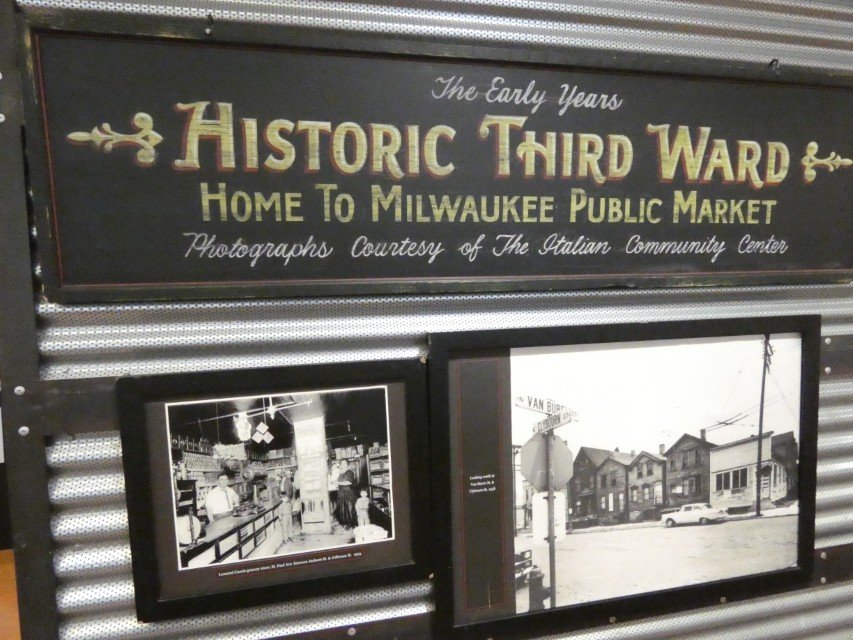
restaurant, Palm Garden. While there, notice the photos of the
historic Third Ward on the side wall. Also, on the second floor
there's a state-of-the-art demonstration kitchen, dedicated to
the memory of Madame Liane Kuony, a pioneer of organic cooking,
that offers cooking classes. The classes are taught by many of
the market vendors and the area's top chefs and instructors.
Naturally, they are not free.
Milwaukee's Riverwalk
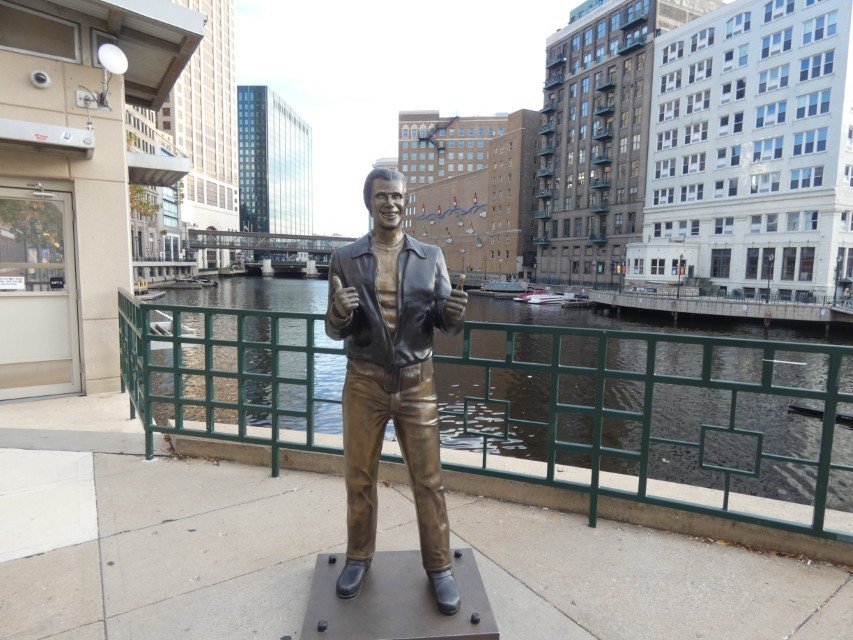
Milwaukee's
Riverwalk is an outdoor art gallery where you find "Bronze
Fonz" and much more. I walked a portion and saw more than just
Fonzie. There is art at twenty points along the Riverwalk
created by national, regional, and local artists. Art can be
enjoyed on both sides of the river, but I walked the side where
the "Bronze Fonz" is.
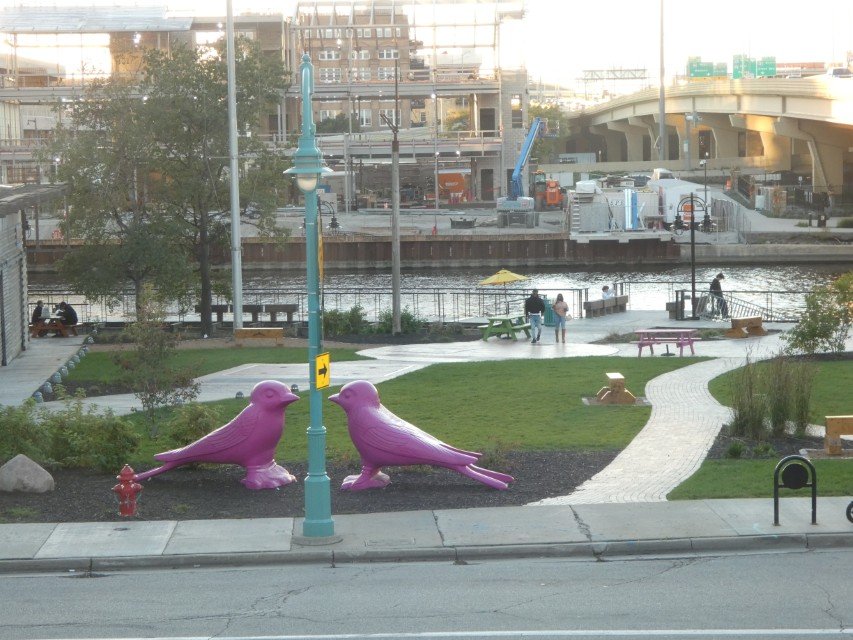
From
one point I could see the Public Market through the park across
from it with two giant pink bird sculptures. There are tables
where you can enjoy your takeout from the market while watching
the river view. There's a map of what you can see at many places
along the Riverwalk and lots of waterfront restaurants you can
enter from the Riverwalk.
Murals
Milwaukee is filled with murals and other
street art. I found some of my favorites in the Hispanic section
on 16th Street.
El Rey is a family-owned Mexican grocery, but inside you
will see some gorgeous murals lining the walls.
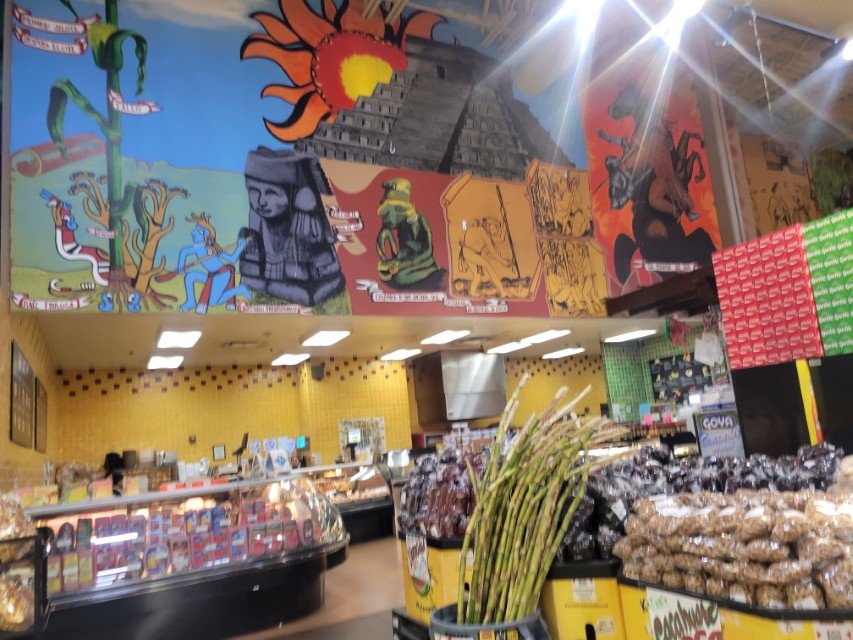
One mural really caught my eye. It is over
the meat section and shows a pyramid and many Aztec gods. Plus,
there are many unusual food items you won't find anywhere else,
and the day I visited, there were venders set up in front
selling craft items.
Along the street, there are Hispanic themed
murals. Among the many building w with murals, I discovered
Taqueria Los Comales. It's a small Midwest chain and a good
place to get local Mexican food.
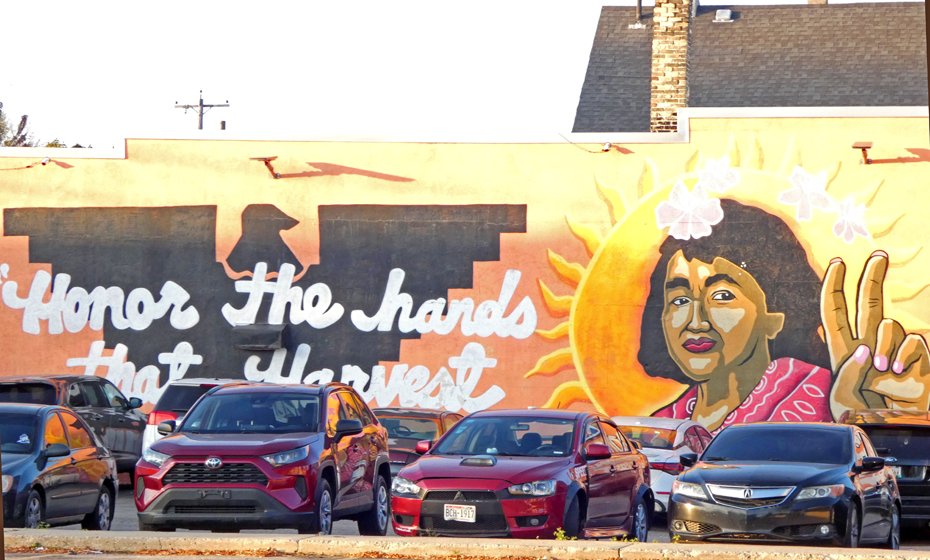
One mural that resonates for me in today's
climate is a mural of Dolores Huerta, civil rights activist and
co-founder of the United Farm Workers Association with Cesar
Chavez. She coined the iconic slogan "¡Si, Se Puede!" (Yes, We
Can!) The mural shows her giving a victory sign and says, "Honor
the hands that harvest your crop."
Pro tip:
This stretch of South 16th Street (between West Pierce Street
and West Mitchell Street) was named South Cesar E. Chavez Drive
from 1996 until April 2026. Many locals still refer to it as
South Cesar E. Chavez Drive.
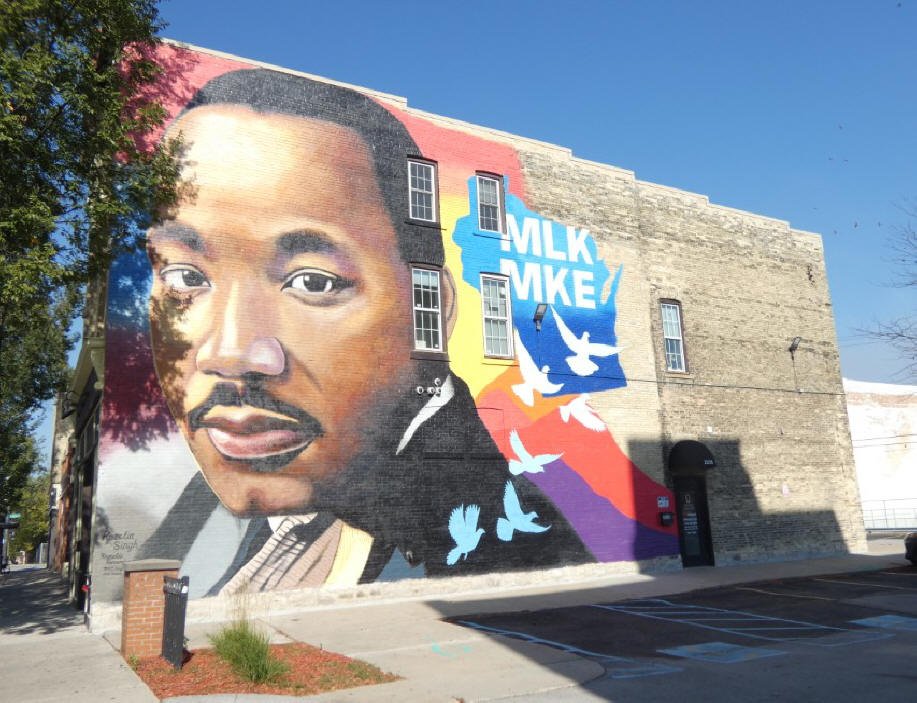
Further along in Milwaukee's Bronzeville
neighborhood I spotted a large mural of Dr Martin Luther King Jr
with white doves flying skyward. I learned it was created by
Rozalia Hernandez-Singh. It's not far from America's Black
Holocaust Museum, which, though not free, is very reasonable at
only $7 for adults.
Black Cat Alley
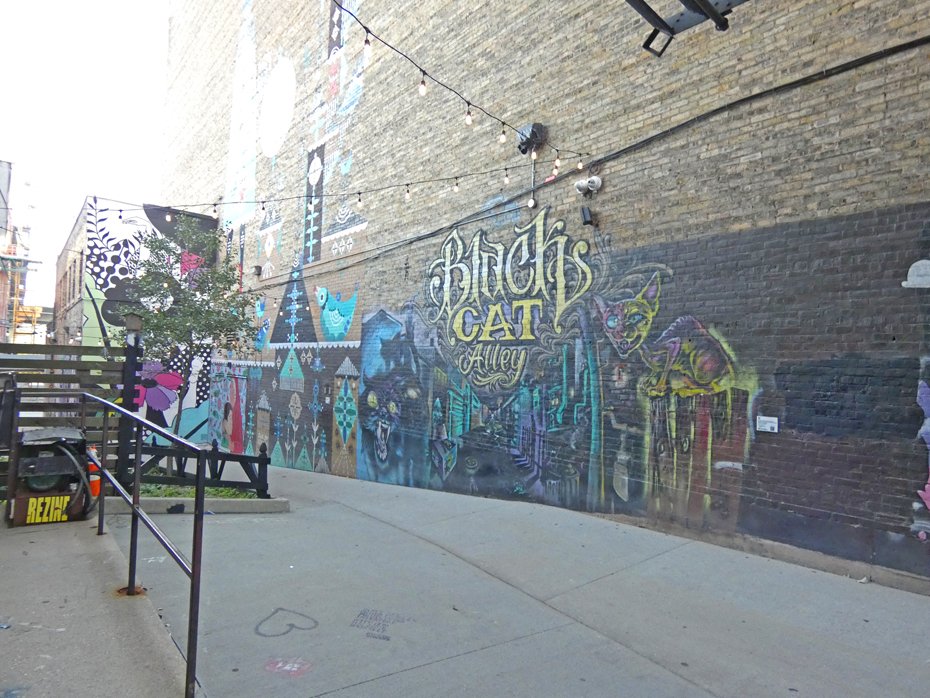
Black Cat Alley murals amazed me. It’s
filled with 21 murals by 24 artists from all over the world.
Some murals are several stories high and there are even some on
the sidewalk. Black Cat Alley is sometimes hard to find. It is
an alley located behind the historic Oriental Theatre at the
intersection of North Avenue and Ivanhoe on Milwaukee's East
Side.
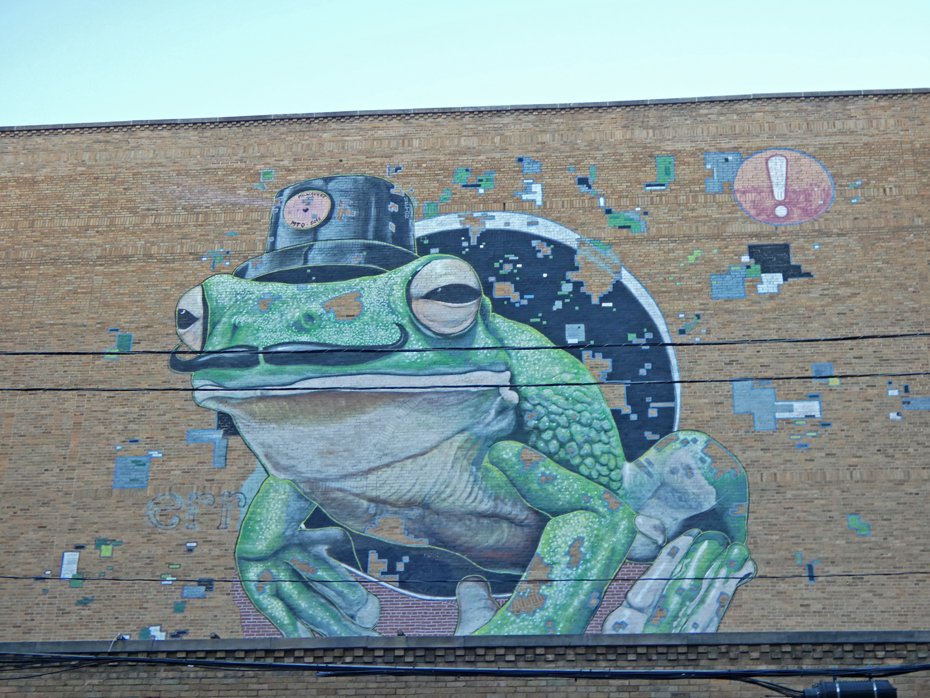
At the south end of the alley, perched on
the second story of one of the corner buildings, there’s a
whimsical 40-foot-tall frog mural.
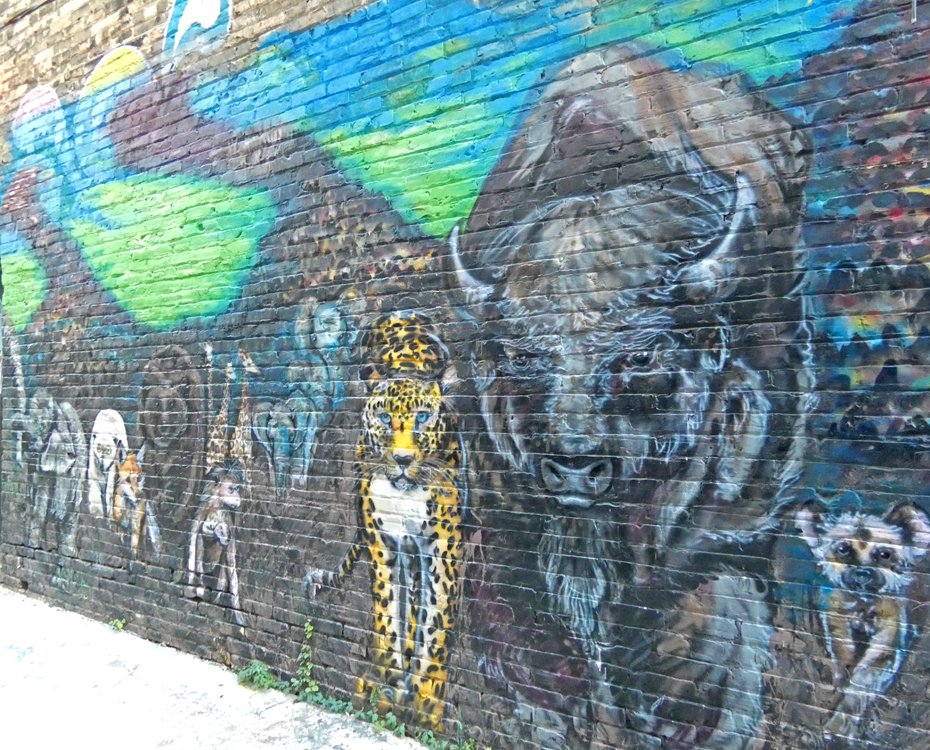
One of my favorites here is "We Are All
Immigrants" by Catalina Bayona, an artist from Colombia now
living in Milwaukee. It portrays many animals of different
species walking forward. Many of the murals speak out for social
justice.
Milwaukee Public Museum
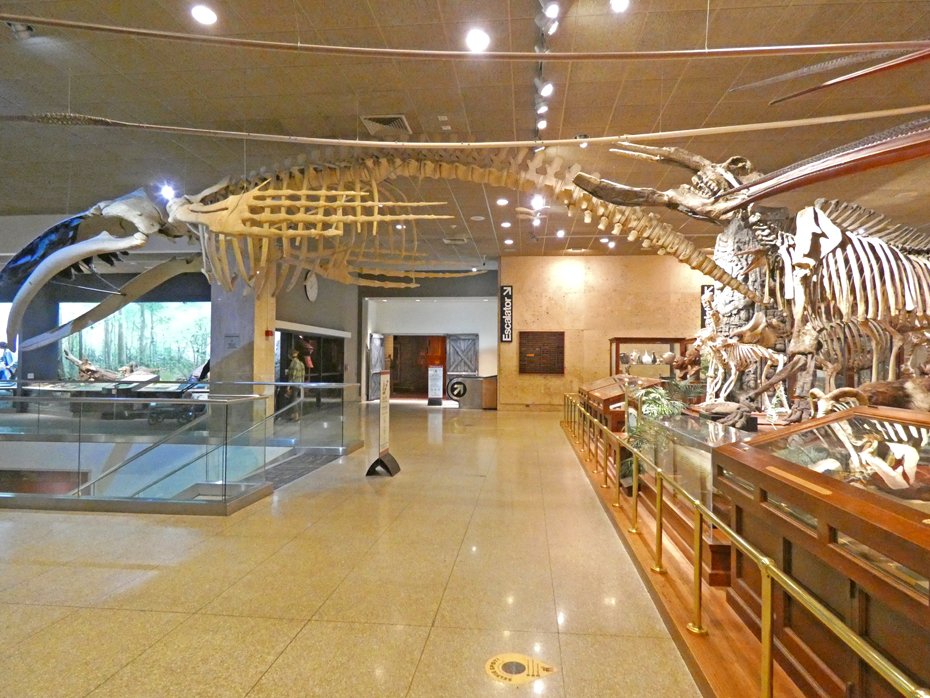
At Milwaukee Public Museum, the first
Thursdays of each month are free. This one is a must-see for all
ages. I wish I had more time there. Go now as I just discovered
Milwaukee Public Museum’s last day open at its current home will
be Jan. 3, 2027. They will be opening as the new Nature &
Culture Museum of Wisconsin in the first half of 2027.
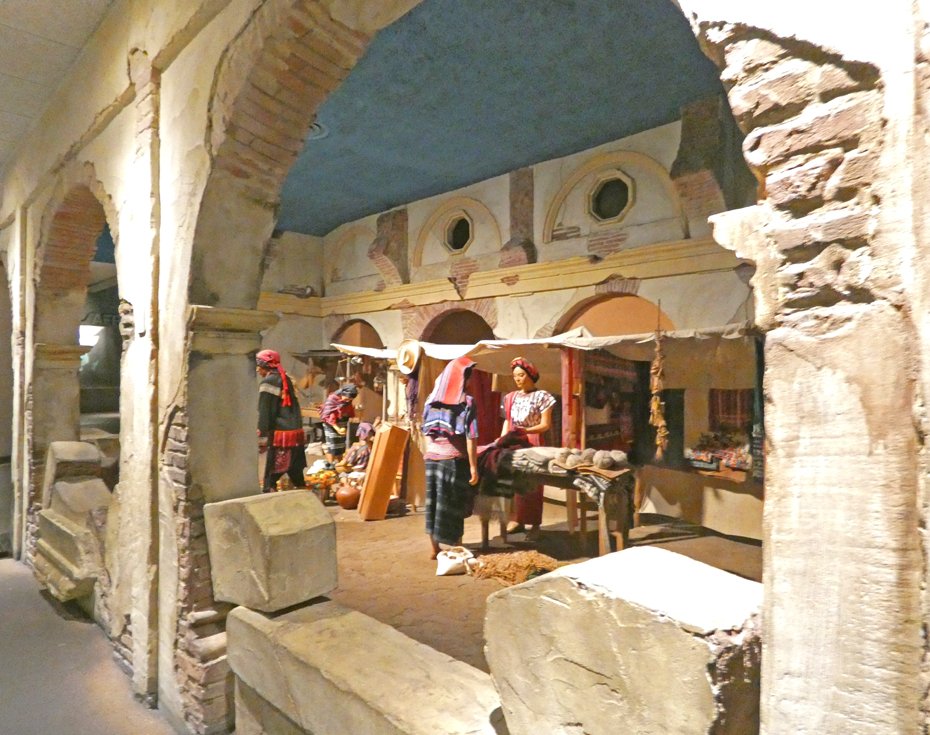
The current Public Museum opened on May 24,
1884. Today, it contains over 4 million specimens. The permanent
exhibits occupy three and a half floors of exhibit area, with
additional space for traveling and temporary exhibits.
The exhibits take you back to prehistoric
times with huge fossils, including one of the largest dinosaur
skulls ever found. I stepped closer to the present and visited
the turn-of-the-century Streets of Old Milwaukee, European
Village, and ancient Mediterranean civilizations. I just hope
the new museum continues the free-admission days and remains as
fantastic as the present one.
The Basilica of St. Josaphat
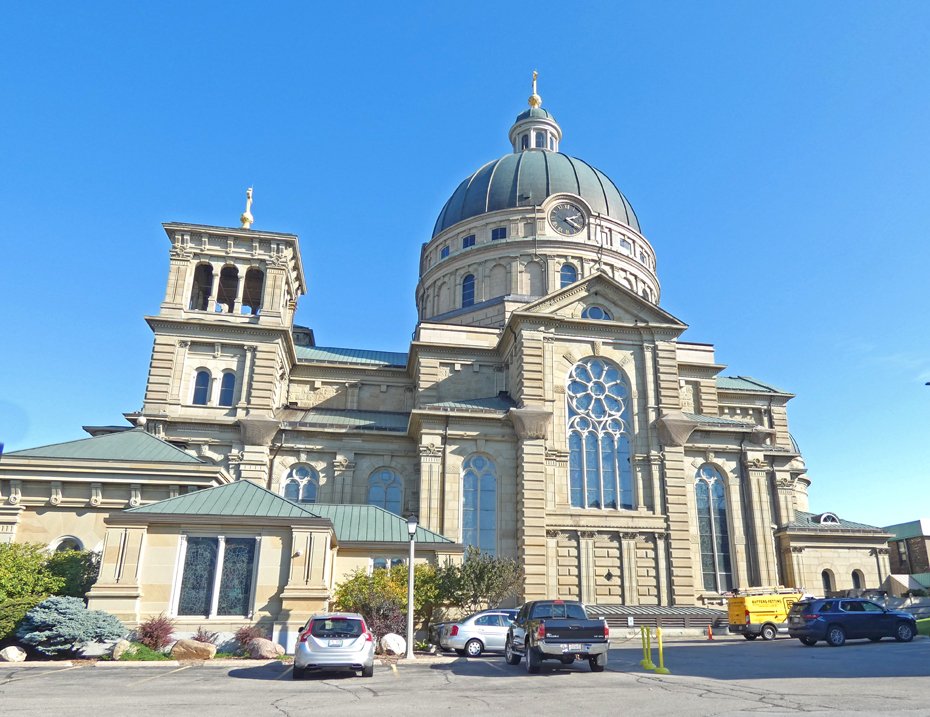
The Basilica of St. Josaphat, built by
Polish immigrants, is the most beautiful church in Milwaukee.
You can enter the Basilica through the Pope John Paul II
Pavilion, located immediately west of the main church through
the 7th Street and Lincoln Avenue parking lot. The door was
locked when I visited, and I used the buzzer located near the
entrance to gain access with no problem. There are stairs or an
elevator to take you to the main section of the basilica.
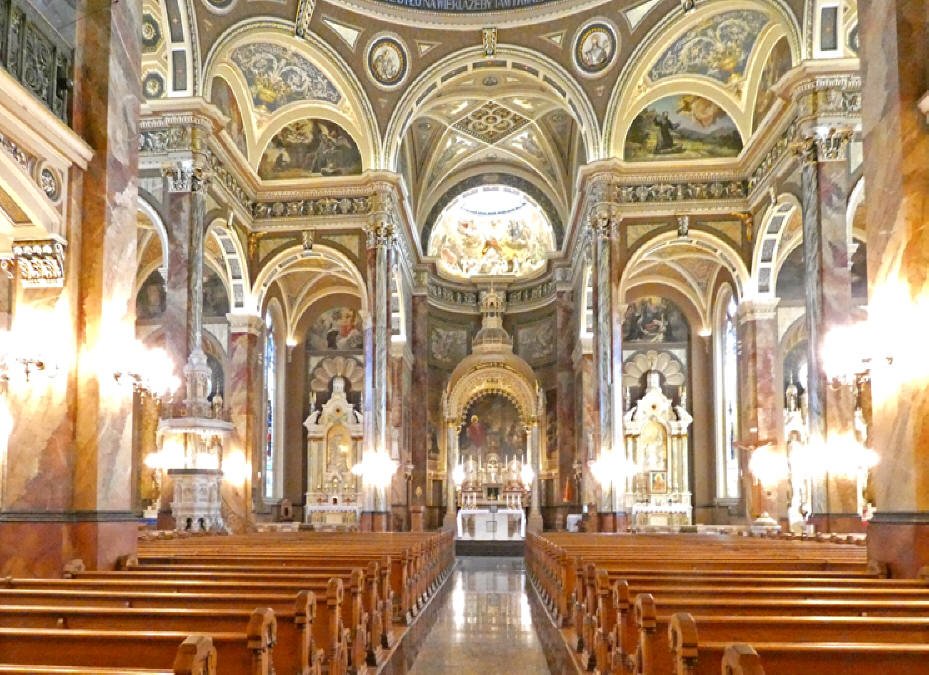
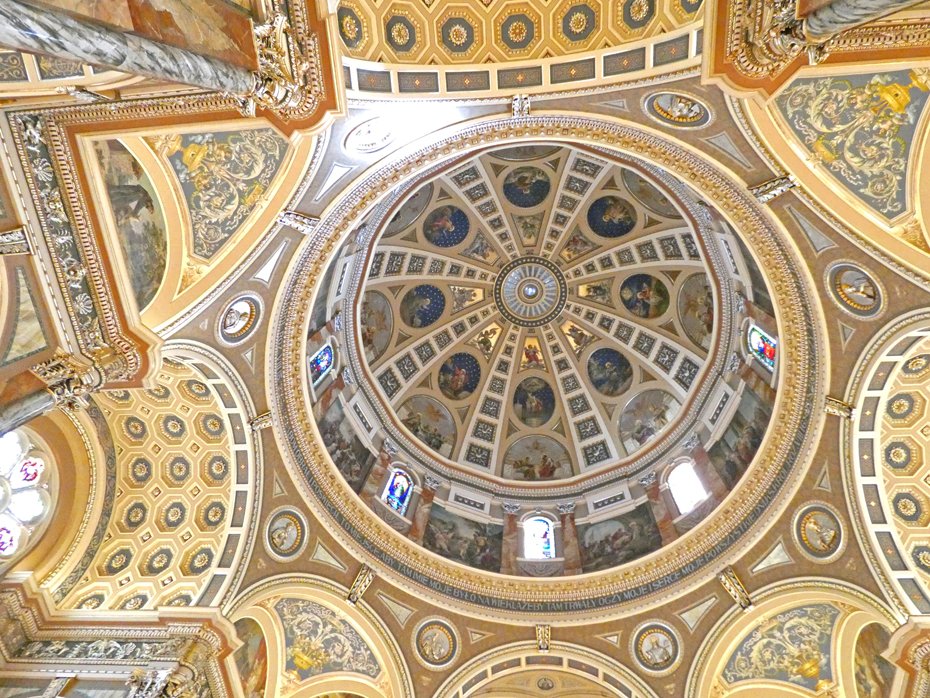
Each of the stained-glass windows is an
amazing work of art. The dome is unbelievable. You can download
a map telling about all the windows and items
here. Although the main church is one of the most beautiful
I have ever seen, there is a lot more to see.
On one of the hall walls of the lower
level, there are placards telling about the history and
restoration of the basilica.
The Hop
And wait; there's more! The Hop offers free
transportation. The Hop operates Monday through Friday from 5
a.m. to 12 a.m., Saturday from 7 a.m. to 12 a.m., and Sunday
from 7 a.m. to 10 p.m. Streetcars arrive every 15-20 minutes.
You can download a
map here.
Pro tip: Visitors with a
SNAP/EBT card get reduced or free admission at participating
institutions, including the Milwaukee Public Museum and the
Milwaukee County Historical Society.
|